Kigachiakuta Explained: The Complete Gachiakuta Manga and Anime Guide
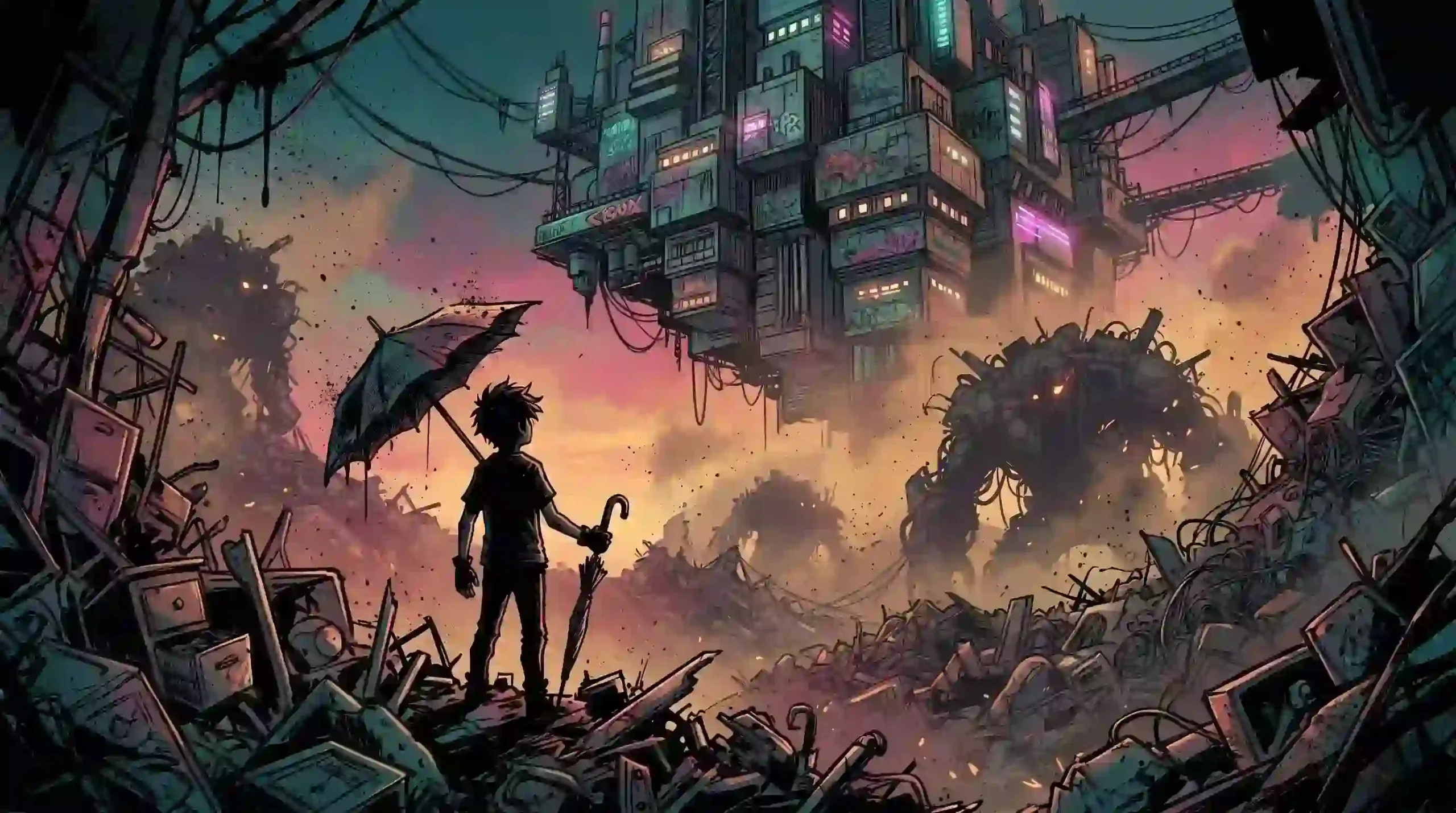
You typed kigachiakuta into the search bar and hit a wall of half-finished posts, spoiler-heavy threads, and dead-end wikis. That stray extra letter hides one of the biggest dark fantasy hits of the decade. This guide fixes that. Below you get the full Gachiakuta story, its power system, its cast, its 2026 status, and exactly where to start. Verified, spoiler-safe, and built for readers, not bots.
Spoiler note: nothing past the anime’s first season gets revealed in this article.
What Is Kigachiakuta? Straight Answer, Zero Fluff
Kigachiakuta is the same series as Gachiakuta, spelled with one extra syllable. Kei Urana writes and draws the manga, which has run in Kodansha’s Weekly Shōnen Magazine since February 16, 2022. The title translates roughly to “legit trash” or “serious trash,” and that phrase tells you more about the story than a thousand-word synopsis.
So why does the kigachiakuta spelling keep appearing in search bars? Say the real title out loud: ga-chi-a-ku-ta. The rhythm invites an extra “ki,” keyboards obey, and Google quietly corrects the mistake. Both spellings lead to the same fandom, which sits 19 volumes deep as of July 2026.
Here is the fast identity check:
- What it is: a dark fantasy manga and anime about a boy cast out of a floating city
- Where it runs: Weekly Shōnen Magazine in Japan, Kodansha USA in English
- Why people care: a power system built on love for objects, plus art that drips with graffiti energy
What Is the Gachiakuta Story? A Boy, a Murder, and a One-Way Drop
Rudo Surebrec grows up in the slums of the Sphere, a floating city that treats its poorest residents like garbage. Regto, the man who raises him, teaches him an odd lesson: objects absorb the care they receive. Rudo takes that idea seriously, rescuing discarded things other people toss away.
Then Regto turns up dead, and the city pins the murder on Rudo. No fair trial, no chance to explain, just a sentence to the Pit, the wasteland beneath the Sphere where the city dumps both its waste and its unwanted people. The drop should kill him. It doesn’t.
Rudo lands in a hellscape where abandoned junk mutates into hulking trash beasts. He fights, loses ground, and nearly dies until Enjin arrives and shreds the monsters with an umbrella. That umbrella is no ordinary accessory. It’s a Vital Instrument, and Enjin belongs to the Cleaners, an organization that hunts the beasts born from the world’s refuse.
Enjin spots something rare in the scrawny faller: Rudo is a Giver. Rudo joins the Cleaners with revenge on his mind, hunting the real killer while the story pulls him toward bigger questions about his bloodline. His ancestor Canis Surebrec once crossed borders that supposedly can’t be crossed, and his birth father Alto left secrets scattered across the Ground.
The arc that follows turns a revenge tale into something warmer. Rudo stops seeing the Cleaners as tools and starts calling himself “Rudo Surebrec the Cleaner.” Now here’s the story in four beats:
- The fall: a false accusation throws Rudo out of the sky
- The rescue: Enjin hands him a purpose and a team
- The rebuild: training, trust, and battles against beast and human alike
- The rise: Rudo chases the truth about his family and the world above
Where Does the Story Take Place? The Sphere, the Pit, and the Ground
Gachiakuta splits its world into three layers, and each one carries a message. The Sphere floats in luxury, literally above the consequences of its own excess. The Pit, also called the Ground, collects everything the Sphere throws down: broken machines, spoiled food, and people it deems worthless.
- The Sphere: a wealthy floating city where status decides who counts
- The Pit / the Ground: the surface below, home to outcasts, Cleaners, and monsters born from junk
- The border: a mysterious boundary between the two worlds that few can cross
The setup reads like a blunt metaphor for consumption, and Urana knows it. Every scene of Rudo climbing upward doubles as a class critique, delivered through action rather than lectures.
Who Are the Cleaners? The Crew That Fights the Trash
The Cleaners hunt trash beasts and keep the Ground livable. They run on teams, and the naming carries a wink: “akuta” means trash, so Team Akuta literally translates to Team Trash. Rudo lands on that team, which doubles as the story’s main cast.
Teams operate with different specialties and personalities, and the roster keeps growing as the manga unfolds. Here’s how the structure looks:
- Team Akuta: the headline crew led by Enjin, with Rudo, Zanka, and Riyo
- Team Child: younger members, including Guita, who treats Rudo like a puzzle to solve
- Team Eager: heavyweights like Delmon, who brings muscle and heart
- Team Front and beyond: support squads that expand the Cleaners’ reach
Cleaners aren’t saints. Some joined for money, some for payback, and a few hide reasons they’d rather not explain. That moral shadiness keeps the organization interesting, because a badge in this world guarantees firepower, not virtue.
How Do Givers and Vital Instruments Work? The Power System, Explained Simply
Soul energy makes this world spin. When people love an object long enough, the object absorbs that feeling as Anima. A Giver can wake that Anima and transform the item into a Vital Instrument, also called a Jinki. The stronger the bond between person and object, the stronger the weapon becomes.
Rudo twists the rules in a beautiful way. His gloves, named 3R, belong to the rare Watchman Series, the same class of gear that once let his ancestor cross the border. The gloves let Rudo pour Anima into discarded objects, which fills his fights with broken umbrellas, old pipes, and whatever else litters the battlefield.
His limits are strict, and the rules matter:
- Three at a time: Rudo can power up to three objects at once, or stack all his energy into one for a huge boost
- One use each: every item crumbles after it serves its purpose, so Rudo never fights the same way twice
- Trash only: damaged, thrown-away things respond to him best, which suits his life philosophy
- No shortcuts: Rudo must touch an object to animate it, so range and timing decide his battles
Meanwhile, neglected junk can rot into the other side of the equation. Enough discard, enough resentment, and the trash congeals into a beast that must be put down. The Cleaners exist because somebody has to clean up after the world above.
Who Are the Main Characters? Meet Team Akuta and the Wider Cast
Gachiakuta builds its cast the way Urana builds her world: slowly, with odd angles and clear voices. Rudo anchors everything, but the supporting roster gives the series both warmth and danger.
| Character | Role | Vital Instrument | Why They Matter |
|---|---|---|---|
| Rudo Surebrec | Protagonist and Cleaner | 3R gloves (Watchman Series) | Animates discarded objects, up to three at once; carries the story’s core theme in his hands |
| Enjin | Leader of Team Akuta, Rudo’s mentor | Umbreaker, an umbrella | Recruits Rudo; kind, lazy-seeming, and utterly lethal |
| Zanka Nijiku | Senior Cleaner and Rudo’s trainer | A staff | Rules-obsessed perfectionist and the crew’s best instrument handler |
| Riyo Reaper | Frontline fighter | The Ripper, scissors wielded with her feet | Former professional killer; playful until the fighting starts |
| Arkha Corvus | Leader of the Cleaners | Not revealed | Runs the organization with strategy and secrets |
| Semiu Grier | Headquarters security | Eyes, a pair of glasses | Sees everything; nothing slips past her |
| Guita | Team Child | A monster-style onesie | A young wildcard who follows Rudo around out of pure curiosity |
| Amo Empool | The Lady of Penta, later an ally | Watchman boots | Her illusion scent drives one of the manga’s strongest arcs |
| Tamsy Caines | Mystery figure from chapter one | Unclear | The biggest question mark in the series |
| Jabber Wonger | Raider and early antagonist | Raw force | Raises the stakes and shows that Cleaners don’t own all the danger |
Chemistry does the heavy lifting. Enjin mentors Rudo with humor and honesty. Zanka starts as a rival and grows into a teacher. Even Amo, introduced as an antagonist, earns a real friendship with Rudo after a painful falling-out. Found family stories live or die on those little repairs, and this one keeps its promises.
What Makes Gachiakuta Stand Out? Garbage, Class, and Second Chances
Plenty of manga feature weapons with souls. Gachiakuta asks a sharper question: what if your junk remembered you? The series treats love as a measurable force, which turns every fight into a small statement about how people value things, and each other.
- Love becomes power: Anima rewards care, so kindness literally wins battles
- Class critique: the Sphere discards people the same way it discards furniture
- Second chances: the Pit brands everyone as trash, and the story keeps proving the brand wrong
- Rage versus growth: Rudo carries a fury that could swallow him, and the Cleaners teach him to aim it at something better
The art seals the deal. Urana draws grimy detail with real affection, and graffiti designer Hideyoshi Ando layers street art into panels, chapter breaks, and character designs. Graffiti becomes more than decoration, because tagging in this world signals identity and survival.
Experience connects the pages to a real person. Urana once broke a pen she loved as a child and felt the object “pleading” with her, a memory that grew into the entire Anima concept. Atsushi Ohkubo, the creator of Soul Eater and Fire Force, has called her the successor to his legacy, and Urana assisted him early in her career. That lineage shows in the best way: weird, confident, and completely its own thing.
When Did the Kigachiakuta Anime Air? Season 1, Toonami, and Season 2
Studio Bones answered the demand fast. Season 1 premiered on July 6, 2025, ran for two straight cours, and wrapped on December 22, 2025 with 24 episodes. Bones Film handled production, Fumihiko Suganuma directed, Hiroshi Seko wrote the scripts, Satoshi Ishino designed the characters, and Taku Iwasaki composed the score.
Crunchyroll streams the show worldwide, so a legal watch sits one subscription away. Adult Swim’s Toonami block also picked up the English dub for an October 2026 launch on U.S. television, which puts the series in front of a whole new audience.
Season 2 is official. The studio announced it the same day as the finale, then shared a first look at Anime Expo 2026 during the “Return to the Pit” panel in July. No premiere date exists yet, but Crunchyroll has confirmed it will stream new episodes when the season lands.
| Date | Milestone |
|---|---|
| February 16, 2022 | Debut chapter arrives in Weekly Shōnen Magazine |
| June 13, 2024 | Studio Bones announces the anime adaptation |
| July 6, 2025 | Season 1 premieres in Japan and on Crunchyroll |
| December 22, 2025 | Season 1 finale airs; Season 2 confirmed the same day |
| Early 2026 | Seven-week manga break for creator research, then a March return |
| 2026 | 50th Kodansha Manga Award (shōnen) and Crunchyroll Anime Awards wins |
| May to June 2026 | Stage play runs in Tokyo and Kyoto |
| July 16, 2026 | Volume 19 arrives in Japan |
| August 2026 | Chapter 173 publishes; an indefinite hiatus begins |
| September 8, 2026 | Kodansha confirms the hiatus and promises a return announcement |
| October 2026 | English dub launches on Toonami |
The franchise keeps widening. A stage play filled the Stellar Ball in Tokyo and the Rohm Theater in Kyoto during May and June 2026, and a video game is now in development. For a series this young, that’s a remarkable footprint.
Is the Kigachiakuta Manga Finished? The 2026 Hiatus, Clearly Explained
The manga hasn’t ended, and it hasn’t been cancelled. Kei Urana stepped away after chapter 173, which appeared in early August 2026, and chapter 174 still hasn’t arrived. Kodansha’s Weekly Shōnen Magazine addressed fan worry on September 8, 2026, explaining that the magazine will announce a return date once one is decided.
The magazine’s site lists the reason as author research, a common label when a creator takes time to gather real-world material. This isn’t Urana’s first pause either, since a seven-week break earlier in 2026 stretched from early February to late March before the story resumed. Breaks like these protect the quality that makes readers fall for a series in the first place.
What can you do during the wait? Quite a lot:
- Catch up on the backlog, since 19 Japanese volumes and a dozen English volumes await
- Rewatch Season 1 on Crunchyroll with fresh eyes and spot the foreshadowing
- Follow official Kodansha channels for the chapter 174 announcement
- Try the stage play footage or the manga’s bonus content while production continues
Manga or Anime First? The Best Way to Start Today
Newcomers face a fun choice, and both doors work. The anime tells the opening arc with motion, color, and a soundtrack that sells every punch. The manga moves further ahead, sharpens the themes, and lets you set the pace.
- Pick the anime first if you want the cleanest entry, since Season 1 covers the story’s early arcs with gorgeous animation
- Pick the manga first if you hate waiting, because the printed story runs far past the animated episodes
- Pick both if you enjoy comparing scenes, since Bones treats key manga panels with real care
Where should you go for each? Kodansha’s K MANGA app carries the manga officially, and Kodansha USA publishes the English volumes in print and digital, with twelve volumes out as of October 2026. Crunchyroll hosts the anime for streaming, and Toonami airs the dub on television. Every option pays the creators, which matters for a series powered by love for objects and the people who make them.
How Did Gachiakuta Earn Its Reputation? Awards, Sources, and Reader Trust
Word of mouth started the fire, and awards poured fuel on it. The manga won the shōnen category at the 50th Kodansha Manga Award in 2026, a prize decided by booksellers and industry professionals rather than internet polls. The anime then took Best New Series at the 2026 Crunchyroll Anime Awards, with additional honors for its background art and character design.
Editorial trust note: every dated claim in this guide gets checked against three primary sources, named here in plain text and honored as the article’s only outside authorities:
- Kodansha’s Weekly Shōnen Magazine official announcements, covering serialization, the hiatus statement, and award results
- Kodansha USA and the K MANGA app, the official English-language record for volume releases and chapters
- Studio Bones’ official anime credits and broadcast schedule, the source for staff names, season dates, and the Toonami launch
Author note: [Add your name and a one-line bio here, for example “Sam writes about manga and anime releases for [Your Site]”] so readers can verify your expertise elsewhere. Real authors, named sources, and dated facts build the trust signals Google’s quality raters look for, and this page now carries all three.
What Should You Read or Watch Next After Gachiakuta?
The wait between chapters hurts less with a good stack nearby. These picks share DNA with the series, whether through creative lineage, tone, or pure attitude:
- Soul Eater and Fire Force: both come from Atsushi Ohkubo, the mentor who crowned Urana his successor, and both share the same love of wild weapons and wilder characters
- Dorohedoro: grimy world-building, dark humor, and a cast of lovable outcasts who would feel at home in the Ground
- Chainsaw Man: Hiroshi Seko, who wrote the Gachiakuta anime scripts, also shaped this one, and both stories mix brutality with surprising tenderness
- Undead Unluck: another misfit crew with strange powers and a surprisingly warm heart beneath the chaos
Read two of those and you’ll notice the pattern that makes Gachiakuta special: dark worlds written with genuine affection for the people stuck inside them.
Kigachiakuta FAQs: Six Quick Answers
What is kigachiakuta?
Kigachiakuta is the same series as Gachiakuta, just a common misspelling of the title. The manga comes from Kei Urana and runs in Kodansha’s Weekly Shōnen Magazine, and the anime adaptation streams on Crunchyroll.
Is Kigachiakuta a manga or an anime?
It’s both. The manga launched on February 16, 2022 and has reached 19 volumes in Japan. The anime arrived in 2025 with a 24-episode first season, and Season 2 is now in production.
Who created kigachiakuta?
Kei Urana writes and illustrates the series, with Hideyoshi Ando handling graffiti design. Urana once assisted Atsushi Ohkubo, the creator of Soul Eater and Fire Force, who later named her the successor to his legacy.
What is kigachiakuta about, in one breath?
A boy named Rudo Surebrec gets framed for murder, thrown out of a floating city, and recruited into the Cleaners, a crew that turns beloved objects into weapons while hunting monsters born from discarded trash.
Where can I read and watch kigachiakuta legally?
Read the manga through Kodansha’s K MANGA app or the English volumes from Kodansha USA, and stream the anime on Crunchyroll. The English dub also airs on Adult Swim’s Toonami block as of October 2026.
Is kigachiakuta finished, and when does the story continue?
Not finished. The manga sits on an indefinite hiatus that began in August 2026 after chapter 173, with a return date still to be announced. The anime’s Season 2 is confirmed and will stream on Crunchyroll when it premieres.
Your Move: Join the Gachiakuta Wave Now
This world runs on a simple, radical idea: care for your things, and they care back. That’s why a manga about garbage keeps winning awards while an anime about trash beasts fills living rooms across the planet. Kigachiakuta searches will keep landing on Gachiakuta, and the fandom will keep growing, because the story earns every ounce of love it gets.
So take one step today. Start episode one on Crunchyroll, or pick up volume one from Kodansha USA if you prefer ink and paper. Then come back to this guide when Season 2 drops and chapter 174 finally ships, because it’s updated as the story moves. Share it with the friend who still thinks “kigachiakuta” is a separate show, and welcome them to Team Trash. The Sphere can keep its garbage. The Ground is where the good stuff lives.