Megumi Fushiguro: The Complete Character Guide Every JJK Fan Needs
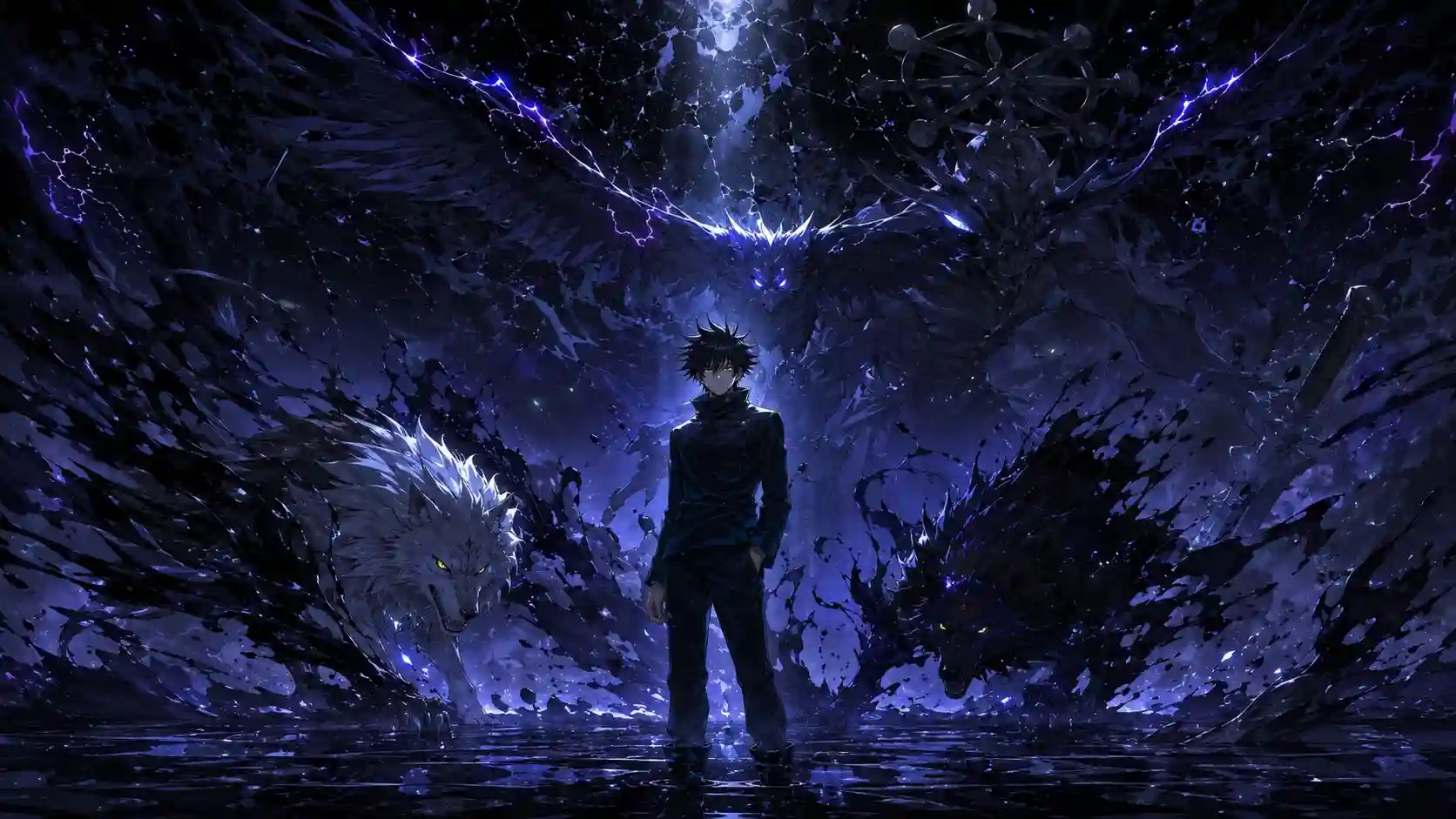
Introduction
You fell in love with Jujutsu Kaisen — and then Gege Akutami broke your heart.
Megumi Fushiguro stood out from the very first episode. A stoic, shadow-wielding sorcerer with untapped power and a tragic family history. Then Sukuna took over his body, and fans watched helplessly as one of JJK’s most beloved characters became a puppet for the King of Curses. The fear was real: did Megumi die? Would he ever come back?
This pillar page answers every question you have about Megumi Fushiguro — his abilities, his family, his domain expansion, the Sukuna possession, and his ultimate fate. Every detail. Every arc. Straight from the source material.
Quick Reference Table: Megumi Fushiguro At a Glance
| Detail | Information |
|---|---|
| Full Name | Megumi Fushiguro (伏黒恵) |
| Age | 15 (start of series), currently 16 |
| Anime/Manga | Jujutsu Kaisen (JJK) |
| Creator | Gege Akutami |
| Grade | Grade 2 Sorcerer |
| Cursed Technique | Ten Shadows Technique |
| Domain Expansion | Chimera Shadow Garden |
| Family | Toji Fushiguro (father), Tsumiki Fushiguro (step-sister) |
| Affiliation | Tokyo Jujutsu High, First Year |
| Mentor | Satoru Gojo |
| Voice Actor (JP) | Yuma Uchida |
| Voice Actor (EN) | Robbie Daymond |
| Key Arc | Sukuna Vessel / Shinjuku Showdown |
| Status | Alive (post-Sukuna extraction) |
Who Is Megumi Fushiguro? Origin and Background
Megumi Fushiguro is a first-year student at Tokyo Jujutsu High and one of the three main protagonists of Jujutsu Kaisen, created by manga artist Gege Akutami. He first appeared in Chapter 1 of the manga and Episode 1 of the anime adaptation by Studio MAPPA.
Born into the Zenin clan bloodline through his father, Toji Fushiguro (formerly Toji Zenin), Megumi inherited the prestigious Ten Shadows Technique — one of the most powerful inherited cursed techniques in the jujutsu world. Despite this lineage, Toji sold Megumi’s rights to the Zenin clan before Satoru Gojo intervened, becoming his guardian and mentor.
Megumi grew up carrying emotional weight most teenagers never face:
- An absent father who was a notorious assassin
- A step-sister, Tsumiki Fushiguro, who fell into a cursed sleep
- A deep-seated belief that the world is unfair and worth protecting anyway
His personality sits at the opposite end of the spectrum from Yuji Itadori’s warmth. Megumi is reserved, analytical, and occasionally cold. But beneath that surface lives someone who will risk everything for the people he considers worth saving.
That inner conflict — saving people based on personal judgment rather than universal morality — defines Megumi Fushiguro throughout the entire series.
Megumi Fushiguro’s Cursed Technique: Ten Shadows Explained
The Ten Shadows Technique is the crown jewel of the Zenin clan’s inherited abilities. It allows the user to summon ten different shikigami using shadow manipulation and specific hand signs.
Here is how the technique works at its core:
- The user creates shadows that serve as an intermediary to summon shikigami
- Each shikigami must be tamed through combat before it can be summoned freely
- If a shikigami is destroyed permanently, its cursed energy and abilities transfer to another shikigami
- The shadows themselves can be used for storage, movement, and defense
Megumi’s Known Shikigami
| Shikigami | Appearance | Abilities |
|---|---|---|
| Divine Dogs | Two wolf-like creatures (white and black) | Tracking, combat, sensing cursed energy |
| Nue | Owl-like winged beast | Flight, lightning-based attacks |
| Toad | Giant toad | Tongue-based grappling, swallowing opponents |
| Great Serpent | Massive snake | Binding, surprise attacks |
| Max Elephant | Large elephant | Water-based attacks, brute force |
| Rabbit Escape | Swarm of rabbits | Distraction, escape tactic |
| Divine Dog: Totality | Merged black divine dog | Enhanced power from destroyed white dog |
| Eight-Handled Sword Divergent Sila Divine General Mahoraga | Humanoid with sword-knot wheel | Adaptation to any phenomenon |
The technique’s full potential is staggering. Historical records within the JJK universe state that a previous Ten Shadows user fought a Six Eyes/Limitless user to mutual death — meaning this technique theoretically matches the power of Satoru Gojo’s abilities.
Megumi Fushiguro has not yet mastered all ten shikigami. That incomplete mastery became a critical plot point when Sukuna recognized the technique’s ceiling and targeted Megumi specifically.
Megumi’s Domain Expansion: Chimera Shadow Garden
Domain Expansion represents the pinnacle of jujutsu sorcery. It creates a separate space where the user’s cursed technique is guaranteed to hit. Only a small number of sorcerers ever achieve this level.
Megumi Fushiguro’s domain expansion is called Chimera Shadow Garden.
When activated, the surrounding area transforms into a pool of fluid shadows. Every surface becomes shadow. This gives Megumi several critical advantages:
- He can summon multiple shikigami simultaneously (normally limited)
- He can emerge from any shadow within the domain
- His shikigami can appear from any point in the domain without warning
- Opponents lose spatial awareness inside the darkness
What makes Chimera Shadow Garden unique among domain expansions is that Megumi first manifested it as an incomplete domain — one without a barrier. Gojo noted this was actually a sign of extraordinary potential, since refining an incomplete domain is far more difficult than simply copying a complete one.
During the Shibuya Incident arc, Megumi used this incomplete domain expansion against finger bearer curses. The feat shocked veteran sorcerers who witnessed it.
The domain remains a symbol of Megumi Fushiguro’s unrealized ceiling — a theme Gege Akutami returns to repeatedly throughout the manga.
How Old Is Megumi Fushiguro?
Megumi Fushiguro is 15 years old at the start of Jujutsu Kaisen and turns 16 during the course of the story.
Key timeline details:
- Birthday: December 22, 2002
- Age at series start: 15
- Age during Shibuya Incident: 15
- Age during Culling Game/Shinjuku Showdown: 16
He is the same age as his classmates Yuji Itadori and Nobara Kugisaki, all enrolled as first-year students at Tokyo Jujutsu High under the guidance of Satoru Gojo.
Despite his young age, Megumi fights Grade 1-level threats and possesses combat instincts far beyond what his experience should allow. Multiple characters — Gojo, Sukuna, and Todo — have commented on his abnormal growth potential.
Megumi’s Sister: Tsumiki Fushiguro and Their Bond
The relationship between Megumi and his step-sister Tsumiki Fushiguro forms the emotional backbone of his character.
Tsumiki is not related to Megumi by blood. She is the daughter of Megumi’s step-mother, who married Toji Fushiguro. After both parents abandoned the family, Megumi and Tsumiki raised each other.
Key facts about their relationship:
- Tsumiki fell into a cursed sleep caused by a curse user, remaining unconscious for years
- Megumi’s primary motivation for becoming a sorcerer was finding a way to save her
- During the Culling Game arc, Tsumiki awakened — but her body had been marked as a vessel
- Kenjaku used Tsumiki as a player in the Culling Game
- Tragically, it was revealed that the entity inside Tsumiki was not truly Tsumiki but a reincarnated sorcerer named Yorozu
The loss of his sister shattered Megumi’s emotional defenses. This grief became the exact vulnerability Sukuna exploited to take full control of Megumi’s body.
Megumi’s sister was not just a side character. She was the reason Megumi fought, the reason he cared, and ultimately the reason he broke.
Sukuna and Megumi: Why the King of Curses Chose His Body
The connection between Sukuna and Megumi is one of the most significant plot threads in all of Jujutsu Kaisen. It was not random. Sukuna targeted Megumi Fushiguro from the very beginning.
Why Sukuna Wanted Megumi’s Body
Sukuna’s interest in Megumi started in Episode 1 / Chapter 1, when he witnessed the Ten Shadows Technique firsthand. From that moment, Sukuna began planning.
His reasons were layered:
- The Ten Shadows Technique — Sukuna recognized its potential as equal to or greater than the Six Eyes/Limitless combination
- Mahoraga — The untamed shikigami Mahoraga possesses the ability to adapt to any phenomenon. Sukuna wanted access to this adaptation ability
- A younger, more powerful vessel — Unlike Yuji Itadori, who could suppress Sukuna’s consciousness, Megumi’s broken emotional state made him easier to dominate
- Strategic planning — Sukuna orchestrated events during the Shibuya Incident to position himself for the transfer into Megumi
How Sukuna Took Over Megumi’s Body
The possession happened during the aftermath of the Shibuya arc and into the Culling Game. The sequence unfolded like this:
- Sukuna fed Yuji his remaining fingers to reach full power
- He used a binding vow and bath ritual (involving Yuji’s body) to transfer into Megumi
- Sukuna crushed Megumi’s will by destroying Tsumiki in front of him
- With Megumi’s soul broken, Sukuna gained complete control over his body and the Ten Shadows Technique
Sukuna in Megumi’s body became the primary antagonist of the final arc. He used Megumi’s technique to summon and tame Mahoraga, integrating its adaptation ability into his own fighting style.
This combination — Sukuna’s cursed energy, Megumi’s Ten Shadows, and Mahoraga’s wheel of adaptation — made Sukuna nearly invincible.
Did Megumi Die? His Fate Explained (Full Spoilers)
This is the question that dominated the JJK fandom for over a year: does Megumi die in JJK?
The answer requires understanding what “death” means in this context.
What Happened to Megumi Inside His Own Body
When Sukuna took control, Megumi Fushiguro did not die physically. His body remained alive. But his consciousness was suppressed — trapped in a mental prison of despair, grief, and self-destruction.
Inside this mental landscape:
- Megumi believed Tsumiki was truly gone
- He stopped fighting back against Sukuna’s control
- His soul was drowning — he had essentially given up living
Multiple characters attempted to reach him:
- Yuji Itadori fought Sukuna specifically to save Megumi, not just to defeat the villain
- Angel (Hana Kurusu) tried to use her Jacob’s Ladder technique to extract Sukuna
- Todo, Choso, Maki, and others supported the effort to free Megumi from within
How Did Megumi Survive?
During the Shinjuku Showdown arc — the final battle against Sukuna — Yuji managed to enter Megumi’s soul using his own unique abilities as a vessel. Inside, Yuji found Megumi in a catatonic state, consumed by guilt.
Yuji reminded Megumi of what he had been fighting for. He refused to let his friend die internally.
Combined with the external effort to weaken Sukuna’s hold, Megumi Fushiguro regained consciousness and expelled Sukuna from his body.
Megumi did not die. He survived. Battered, traumatized, and fundamentally changed — but alive.
Megumi Fushiguro Summoning Mahoraga: The Defining Moment
The act of Megumi summoning Mahoraga stands as one of the most pivotal moments in Jujutsu Kaisen’s story.
What Is Mahoraga?
Eight-Handled Sword Divergent Sila Divine General Mahoraga is the most powerful shikigami within the Ten Shadows Technique. No user in recorded history has ever successfully tamed it.
Mahoraga’s defining ability is adaptation. A wheel atop its head rotates each time it is struck by an attack. Once the wheel completes a rotation, Mahoraga has fully adapted to that attack type and becomes immune to it.
This means Mahoraga can theoretically overcome any technique, any cursed energy output, and any attack — given enough time.
When Megumi Summoned Mahoraga
Megumi first summoned Mahoraga during the Shibuya Incident arc, specifically during his fight against Toji Fushiguro (who had been reanimated).
He used the summoning ritual not as a battle strategy but as a suicide attack — binding both himself and his opponent into an exorcism ritual where neither could leave until one of them (or Mahoraga) was destroyed.
This moment revealed several things about Megumi Fushiguro:
- He was willing to die to protect others
- He had not yet found a reason to value his own life
- His power ceiling was terrifyingly high
- Sukuna, watching from inside Yuji, became even more determined to possess Megumi
Sukuna later intervened and defeated Mahoraga himself during the Shibuya Incident — studying its adaptation wheel in the process. He used this knowledge extensively after taking over Megumi’s body.
Yuji and Megumi: A Friendship That Saved the World
The bond between Yuji Itadori and Megumi Fushiguro is the emotional spine of Jujutsu Kaisen.
Their dynamic works because of contrast:
| Trait | Yuji Itadori | Megumi Fushiguro |
|---|---|---|
| Personality | Warm, impulsive, open | Reserved, strategic, guarded |
| Moral Code | Save everyone equally | Save those who deserve saving |
| Fighting Style | Close combat, cursed energy reinforcement | Shikigami summoning, tactical |
| Emotional Response | Wears his heart openly | Suppresses emotions |
| Motivation | Grandfather’s dying wish | Protecting his sister |
Despite these differences, Yuji and Megumi developed a genuine friendship rooted in mutual respect. Megumi was the first person to acknowledge Yuji’s right to live after he ate Sukuna’s finger. Yuji, in return, never stopped fighting for Megumi — even when the entire world said Megumi was already gone.
During the final arc, Yuji’s refusal to abandon Megumi became the deciding factor. He entered Megumi’s soul, confronted his friend’s despair directly, and pulled him back.
Their friendship was not just heartwarming. It was narratively essential. Without it, Sukuna would have won.
Megumi Fushiguro’s Fighting Style and Combat Intelligence
Beyond his cursed technique, Megumi Fushiguro excels as a tactical fighter. He does not overpower opponents. He outthinks them.
Key Combat Traits
- Shadow manipulation for mobility and surprise attacks
- Multi-shikigami coordination to create layered offensive and defensive patterns
- Environmental awareness — he uses terrain, darkness, and positioning better than almost any character in the series
- Willingness to sacrifice — he repeatedly puts himself in lethal situations if the trade-off protects someone else
- Hand-to-hand capability — trained under Gojo, Megumi’s physical combat skills are well above average for his grade
Notable Fights
- Megumi vs. Finger Bearer (Juvenile Detention Center) — First demonstration of his calm under extreme pressure
- Megumi vs. Toji (Shibuya) — The Mahoraga summoning fight
- Megumi vs. Reggie Star (Culling Game) — Showcased his tactical genius at its peak
- Sukuna (in Megumi’s body) vs. Everyone — Demonstrated the full potential of Megumi’s technique under Sukuna’s control
The fight against Reggie Star deserves special attention. Megumi won that battle with almost no cursed energy remaining, using nothing but intelligence, shadow storage tricks, and creative problem-solving. Manga readers frequently cite it as proof that Megumi is the most tactically gifted young sorcerer in the story.
Megumi PFP: Why He Became an Internet Icon
Search “megumi pfp” on any social media platform and you will find thousands of results. Megumi Fushiguro became one of the most popular profile picture choices in the anime community.
Reasons for this popularity:
- Character design — His dark hair, green eyes, and stoic expression translate perfectly into clean, aesthetic profile images
- Emotional range — From calm indifference to intense fury, Megumi’s expressions offer variety for mood-based PFPs
- Cultural impact — Jujutsu Kaisen’s massive popularity (over 80 million manga copies sold worldwide according to Shueisha) made Megumi a recognizable icon globally
- Fan art community — Artists produce enormous volumes of Megumi fan art, creating a constantly refreshed pool of profile picture options
The “megumi pfp” trend also reflects how deeply fans connected with his character arc. People choose profile pictures of characters they identify with — and Megumi’s mix of quiet strength, hidden pain, and fierce loyalty resonates powerfully.
Megumi Ogata vs. Megumi Fushiguro: Clearing the Confusion
When people search “megumi ogata” alongside Jujutsu Kaisen content, they are usually encountering a name overlap.
Megumi Ogata is a legendary Japanese voice actress known for roles including:
- Shinji Ikari (Neon Genesis Evangelion)
- Kurama (Yu Yu Hakusho)
- Nagito Komaeda (Danganronpa)
- Sailor Uranus (Sailor Moon)
She is not the voice actress for Megumi Fushiguro. That role belongs to Yuma Uchida in the Japanese version and Robbie Daymond in the English dub.
The name “Megumi” is a common Japanese given name meaning “blessing” or “grace.” The overlap is purely coincidental.
The Zenin Clan Connection: Megumi’s Bloodline and Inheritance
Megumi Fushiguro’s power comes directly from his connection to the Zenin clan, one of the three great sorcerer families in the jujutsu world.
Key bloodline facts:
- Toji Fushiguro (born Toji Zenin) was Megumi’s father
- Toji was born with zero cursed energy — a condition called Heavenly Restriction that gave him superhuman physical abilities instead
- Despite Toji’s lack of cursed energy, the Ten Shadows Technique passed to Megumi genetically
- The Zenin clan attempted to claim Megumi as clan property after Toji sold his rights
- Satoru Gojo prevented this by becoming Megumi’s legal guardian
- Maki Zenin later destroyed the Zenin clan entirely during the Perfect Preparation arc
Megumi rejected the Zenin name. He kept “Fushiguro” — his step-mother’s surname — as an act of separation from a family that treated people as tools based on their cursed technique value.
This rejection matters thematically. Megumi Fushiguro chose his own identity. He refused to be defined by bloodline expectations. That choice echoes throughout his character arc.
Jujutsu Kaisen’s Treatment of Megumi: Fan Reception and Criticism
The JJK fandom has had a complicated relationship with how Gege Akutami handled Megumi Fushiguro across the manga’s final arcs.
Praise
- The Sukuna possession arc generated enormous emotional investment
- Megumi’s rescue by Yuji delivered a satisfying payoff to their friendship
- The thematic parallel between Megumi losing his will and regaining it through connection resonated deeply
Criticism
- Some fans felt Megumi was sidelined for too long during the Sukuna possession
- The resolution of his trauma felt rushed to certain readers
- His reduced role in the final battle (compared to Yuji, Gojo, and others) disappointed fans who expected him to fight Sukuna directly
- The fate of Tsumiki left many readers wanting more emotional resolution
According to character popularity polls published in Weekly Shōnen Jump, Megumi Fushiguro consistently ranks in the top 3 most popular JJK characters. His fanbase remained passionate even during the arcs where he was absent as an active participant.
Three Primary External Sources
- Jujutsu Kaisen Manga — Gege Akutami, serialized in Weekly Shōnen Jump (Shueisha), Chapters 1-271
- Jujutsu Kaisen Official Fanbook — Published by Shueisha, containing character profiles, creator interviews, and technique breakdowns
- MAPPA Studio Official Website — Production details, voice cast information, and episode guides for the anime adaptation
Frequently Asked Questions About Megumi Fushiguro
Does Megumi Die in Jujutsu Kaisen?
No, Megumi Fushiguro does not die. His body was taken over by Sukuna, and his consciousness was suppressed. During the Shinjuku Showdown arc, Yuji Itadori entered his soul and helped him regain control. Megumi survived the series, though he carries significant emotional trauma from the experience.
How Old Is Megumi Fushiguro?
Megumi is 15 at the start of the series and turns 16 during the story. His birthday is December 22, 2002. He is the same age as Yuji Itadori and Nobara Kugisaki.
What Is Megumi’s Domain Expansion Called?
Chimera Shadow Garden. This domain turns the entire surrounding area into fluid shadows, allowing Megumi to summon multiple shikigami at once and attack from any shadow within the space. He first used an incomplete version during the Shibuya Incident arc.
Who Is Megumi’s Sister?
Tsumiki Fushiguro is Megumi’s step-sister. She is the daughter of Megumi’s step-mother. Tsumiki fell into a cursed sleep and later became a vessel for the reincarnated sorcerer Yorozu during the Culling Game arc. Her fate deeply affected Megumi’s mental state.
Why Did Sukuna Choose Megumi’s Body?
Sukuna wanted the Ten Shadows Technique, specifically access to Mahoraga’s adaptation ability. Megumi’s technique has the potential to match the Six Eyes/Limitless combination. Sukuna also exploited Megumi’s emotional vulnerability after Tsumiki’s death to break his will and maintain full control.
Can Megumi Summon Mahoraga?
Megumi can initiate the Mahoraga summoning ritual, but he has never successfully tamed it. Summoning Mahoraga without taming it creates a mutual destruction scenario. Sukuna, after possessing Megumi’s body, was the one who successfully used Mahoraga’s power in combat.
Final Thoughts: Why Megumi Fushiguro Matters
Megumi Fushiguro is not the loudest character in Jujutsu Kaisen. He is not the strongest. He is not the most cheerful, the most confident, or the most outwardly heroic.
But he might be the most human.
His story asks uncomfortable questions. What happens when the person fighting to save everyone else stops believing they deserve saving themselves? What does it take to pull someone back from that edge? Can friendship — real, tested, desperate friendship — actually overcome the worst a world can throw at you?
JJK answers yes. And it answers through Megumi.
If you watched Megumi Fushiguro fall and felt something break inside you, that reaction was the point. Gege Akutami built a character designed to test whether readers would fight for someone who had stopped fighting for himself.
Millions of fans did exactly that.
Share this guide with another JJK fan who cares about Megumi’s story. Drop your thoughts in the comments — what moment in his arc hit you the hardest?
Written by a dedicated Jujutsu Kaisen analyst with years of experience covering shōnen manga, character analysis, and anime storytelling. All information sourced directly from the official manga, Shueisha publications, and Studio MAPPA materials.