Is MyAnimeList Worth Using? A Complete Guide to MAL
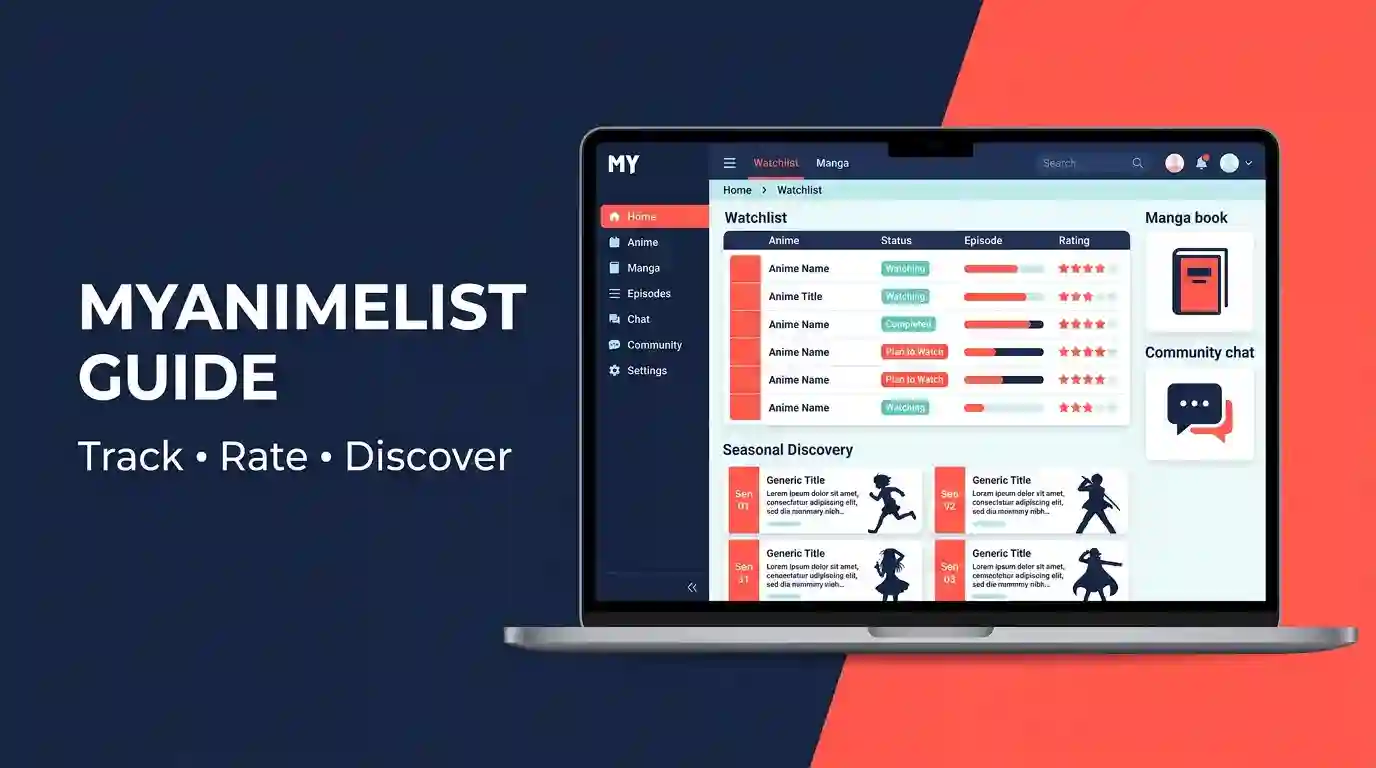
Losing track of episodes turns a relaxing hobby into a frustrating memory test. Recommendations also miss the mark when your viewing history lives across notes, screenshots, and streaming apps. myanimelist brings that scattered record into one organized profile, helping you track anime and manga, score completed titles, discover related works, and meet other fans. This guide shows what it does, where it falls short, and how to use it well.
Quick answer: What is MyAnimeList?
myanimelist is an anime and manga database with personal list tools and community features. Members can record what they are watching or reading, mark progress, assign scores, write reviews, receive recommendations, follow industry news, and join discussions.
The service is often shortened to MAL. People may also type “my anime list,” “myanime,” or “anime myanimelist” when trying to find the same platform. The official site describes itself as an anime and manga database and community, which captures its two main roles: structured information and fan participation.
MyAnimeList features at a glance
The table below gives new users a fast view of the main tools, their purpose, and the best time to use each one.
| Feature | What it does | Best use | Practical tip |
|---|---|---|---|
| Anime list | Records titles and episode progress | Tracking current, completed, paused, dropped, and planned shows | Update progress after each viewing session |
| Manga list | Records chapters and volumes | Tracking manga, light novels, manhwa, and related print works | Use both chapter and volume fields when available |
| Title pages | Collects synopsis, format, dates, staff, characters, related entries, and community activity | Checking basic facts before starting a series | Confirm sequel and prequel links before choosing watch order |
| Scores | Lets members rate titles on the platform’s scale | Building a personal rating history | Write a private scoring rule so similar titles receive consistent scores |
| Reviews | Publishes longer reader opinions | Learning why a title may or may not fit your taste | Read the reasoning, not only the final score |
| Recommendations | Connects titles with similar appeal | Finding a next watch or read | Compare the stated similarity with genres, themes, and staff |
| Seasonal pages | Organizes anime by broadcast season | Planning current viewing | Start with a small shortlist instead of adding every new show |
| Search and filters | Narrows the database by terms and attributes | Finding titles by format, status, genre, or other fields | Apply one filter at a time so you know what changed the results |
| Rankings and popularity | Orders entries using site activity and scoring data | Scanning widely watched or highly rated works | Treat rank as a discovery signal, not a verdict |
| Forums and clubs | Hosts discussions and interest groups | Meeting fans with shared tastes | Read each area’s rules before posting |
| News and articles | Covers releases, adaptations, people, and industry topics | Following anime and manga developments | Check publication dates when researching an evolving story |
| Profile | Displays lists, favorites, activity, and chosen details | Sharing taste with friends | Review privacy and visible profile fields before sharing the link |
| Statistics | Summarizes viewing or reading activity | Seeing habits over time | Use totals as a diary, not a productivity contest |
How does MyAnimeList work?
A member creates an account, searches for a title, and adds it to a personal anime or manga list. Each entry can carry a status such as watching, completed, on hold, dropped, or plan to watch. Manga entries use comparable reading states. The member then updates episode, chapter, or volume progress over time.
Every database page acts as an entity record. An anime entity may connect to a manga source, sequel, side story, studio, voice actor, director, character, theme, and user-generated discussion. Those relationships help both people and search systems understand the subject beyond a single title name.
You can browse much of the database without signing in. An account becomes useful when you want persistent tracking, scores, favorites, profile activity, reviews, recommendations, or community participation.
Is MyAnimeList free to use?
Core list creation, title lookup, scoring, and community access are available without requiring a basic user to pay. The service may also present optional paid benefits or advertising, and its offers can change. Check the current account or membership page before making a purchase.
A free account is enough for most beginners. Use it for a few weeks before deciding whether any optional benefit solves a real problem for you.
How to create a useful account from day one
Do not begin by importing every title you vaguely remember. A rushed list creates uncertain scores, duplicate entries, and incorrect completion states. Start with reliable memories, then fill gaps when you have time.
Use this setup sequence:
- Create the account through the official site.
- Select a username that you are comfortable sharing with the public.
- Use a unique password and enable any security options currently offered.
- Review profile visibility and communication settings.
- Add three titles you are watching now.
- Add five completed titles you remember clearly.
- Add only the next few titles you genuinely plan to watch.
- Decide what each score means before rating a large backlog.
- Check your public profile while signed out to see what visitors can view.
A focused setup creates a list you can trust. It also makes future recommendations more useful because your records reflect actual taste rather than an oversized wish list.
How to build and manage an anime list
Search for the exact series, film, special, or original video animation you want to add. Confirm the year, format, and related titles because one franchise may have several entries with very similar names. Then choose the status that reflects your real activity.
A clean myanimelist workflow uses these states consistently:
- Watching: You started the title and expect to continue soon.
- Completed: You finished the entry as cataloged.
- On hold: You paused but may return.
- Dropped: You chose not to continue.
- Plan to watch: You intend to start it, but have not watched it yet.
Update episode progress in batches if changing it after every episode interrupts your viewing. Accuracy matters more than speed. If you rewatch a title, use the available rewatch fields or notes rather than erasing your first history without reason.
A simple weekly list routine
Set aside five minutes once a week:
- Update progress for active shows.
- Move finished entries to completed.
- Pause titles you have not touched for several weeks.
- Remove impulse additions from the plan-to-watch list.
- Add one sentence of private context where memory may fade.
This routine prevents “currently watching” from becoming a shelf of abandoned titles. It also gives you a realistic queue for your next free evening.
How to track manga, light novels, and related works
The manga side follows the same principle but adds chapter and volume progress. Search carefully because a franchise may include a main manga, adaptation, spin-off, sequel, novel, or one-shot. Confirm the entry type and publication details before adding it.
For ongoing works, chapter counts may remain unknown or change when publication ends. Record the progress you have actually reached rather than guessing the final total. If your edition combines volumes or numbers chapters differently, keep a personal note so you can reconcile the database record with the copy you own.
The phrase my anime list can make the platform sound anime-only, yet manga tracking is a major part of its value. Readers can build a unified history instead of keeping separate notebooks for shows and books.
How should you score anime and manga?
A score becomes helpful when it expresses your experience consistently. It does not need to match the site average, a critic’s opinion, or a friend’s rating. Your list is a personal record first.
Create a short scoring guide before rating dozens of titles. For example:
| Score band | Personal meaning | Question to ask |
|---|---|---|
| 9–10 | Exceptional or a lasting favorite | Would I strongly recommend or revisit this? |
| 7–8 | Good to very good | Did it succeed despite noticeable flaws? |
| 5–6 | Mixed or average for me | Was the experience worthwhile but uneven? |
| 3–4 | Weak | Did major problems outweigh the good parts? |
| 1–2 | Very poor for me | Did I find little value in finishing it? |
You may value character writing, visual direction, emotional impact, comedy, adaptation quality, or originality differently. State your criteria in profile notes or a private document. That makes your scores easier to interpret months later.
Do not use community scores as instructions. A high average tells you that many participating members rated a title favorably; it cannot tell you whether its pacing, humor, themes, or content suit you.
What do ratings, rankings, and popularity mean?
These three ideas answer different questions. A rating summarizes member scores under the platform’s current calculation. A ranking places eligible entries in an ordered list. Popularity reflects member-list activity rather than critical approval.
An entry can be popular without holding a top score. A less widely watched title can earn strong ratings from a smaller audience. Sequels may also attract viewers who already liked earlier installments, which can shape the rating pool.
Use the numbers as starting points:
- Use rating to spot broad member sentiment.
- Use rank to scan highly scored eligible titles.
- Use popularity to see what many members have added.
- Use reviews to understand reasons behind opinions.
- Use your preferences to make the final choice.
The exact formula, eligibility rules, and displayed data can change. Avoid publishing hard claims about calculations unless you verify the current help documentation on the day you update your article.
How to discover anime that fits your taste
The fastest method is not opening the highest-ranked page and choosing number one. Begin with a title you already enjoyed, then inspect its genres, themes, related works, staff, studio, characters, recommendations, and member reviews. Each connection offers a different discovery path.
A practical myanimelist discovery process looks like this:
- Pick one favorite and name the exact quality you liked.
- Check user recommendations for titles sharing that quality.
- Open two or three candidate pages.
- Compare format, episode count, age rating, themes, and synopsis.
- Read one positive and one critical review without seeking spoilers.
- Watch an official trailer through an authorized channel if available.
- Add only the best match to your immediate queue.
Search by staff when you admire direction, music, scripts, character design, or voice performances. Search by source material when you want more adaptations from a favorite manga creator. Browse a seasonal chart when you want current broadcasts, but choose a manageable number.
The query “anime myanimelist” often reflects a user who wants a specific show page. Adding the title, year, or season number to the search query usually reaches the correct entity faster.
How to read reviews without letting them make your decisions
A useful review explains who may enjoy a title and why. Look for observations about pacing, character development, visual storytelling, sound, adaptation choices, themes, and ending quality. Specific evidence matters more than a dramatic score.
Read reviews after checking the synopsis and content information, but before exposing yourself to major plot details. Use spoiler controls where provided. If a review states a factual claim about production or publication, verify it against a reliable first-party source before repeating it elsewhere.
Reviews reflect individual taste. Compare the reviewer’s stated values with your own. A complaint about slow pacing may become a recommendation if you enjoy patient stories.
When writing your own review, describe your experience, support opinions with spoiler-safe examples, and identify the likely audience. Avoid attacking creators or other fans. Clear criticism contributes more than outrage.
How recommendations differ from reviews
A review evaluates one work in depth. A recommendation connects two works and explains their shared appeal. The best recommendations name the link: a similar conflict, emotional tone, visual style, setting, character dynamic, or narrative structure.
Do not assume similar genre tags produce the same experience. Two fantasy series may differ sharply in tone, audience, violence, pacing, and humor. Read the recommendation text and inspect both title records.
You can improve the community catalog by writing a recommendation only when you have enough direct experience with both works. Explain the connection in a few precise sentences and mention one important difference.
How to use seasonal anime pages without feeling overwhelmed
Seasonal pages group broadcasts by periods such as winter, spring, summer, and fall. They help you see new television series, returning installments, films, and other releases in one place. The page can become noisy when dozens of titles compete for attention.
Apply a three-list system:
- Start now: Up to three shows that strongly match your taste.
- Wait for feedback: Titles that interest you but need more episodes or trusted reviews.
- Check later: Completed shows you may binge after the season.
This method protects your time and lowers the chance of dropping ten pilots at once. It also gives finished series time to reveal production delays or major shifts in reception.
Is MyAnimeList accurate?
myanimelist is useful as a broad catalog, but no large database should be treated as infallible. Release details can change, episode counts may be unknown during broadcast, titles can have regional variants, and user-submitted information may need review.
For casual list tracking, the database is usually the practical first stop. For publication-grade research, confirm sensitive facts through official anime websites, publishers, studios, licensors, creator accounts, or other first-party records. Cite the source that directly owns or announced the information.
Separate database facts from community opinion. A date, staff credit, or format is a factual field. A score, review, favorite count, or forum reaction reflects participating users at a particular time.
How to use forums, clubs, and social features safely
Community tools can turn a private watch log into a shared hobby. Forums support topic-based conversations, while clubs gather people around genres, franchises, creators, challenges, or local interests. Profiles and comments make direct interaction easier.
Public discussion also carries risk. Protect yourself with a few habits:
- Read community and board-specific rules before posting.
- Avoid sharing your legal name, address, school, workplace, travel plans, or private contact details.
- Use spoiler tags correctly and label the affected episode or chapter.
- Do not click unfamiliar downloads or sign-in links from messages.
- Block or report harassment instead of extending the conflict.
- Keep account credentials unique.
- Parents and guardians should review account visibility with younger users.
A profile can reveal viewing times, favorites, friends, and comments. Review what is public and share only what supports the experience you want.
Does MyAnimeList have an app and mobile access?
Mobile options, supported features, and regional availability can change. Start from the official website and its verified app links rather than trusting a look-alike result. Check the listed developer, permissions, privacy information, update history, and user support details before installation.
A mobile interface works well for quick episode updates. The full site may feel better for detailed list cleanup, long reviews, forum writing, and research across several tabs.
People sometimes search “myanime” when they mean a shortcut to their list or a mobile product with a similar name. Check the domain and publisher carefully. Similar branding does not prove official ownership.
MyAnimeList vs a spreadsheet: Which is better?
A spreadsheet gives you full control over fields, formulas, offline copies, and private notes. It requires manual data entry and does not automatically connect each title to characters, staff, related works, reviews, or a fan community.
myanimelist offers a ready-made catalog and social layer. Its structure saves time, but you work within its available fields and policies. The best choice depends on your goal.
Choose the database when you want:
- Fast title lookup
- Connected franchise entries
- Community reviews and recommendations
- Seasonal browsing
- A shareable fan profile
Choose a spreadsheet when you want:
- Private or offline control
- Custom rating categories
- Detailed notes for academic or professional research
- Tracking fields the service does not provide
- A personal backup independent of one platform
Serious catalogers can use both. Keep the public list convenient, then export or maintain essential personal records in a format you control, subject to the platform’s current tools and terms.
MyAnimeList vs streaming services: What is the difference?
A database helps you organize and research titles. A licensed streaming service provides video access in supported regions. One does not automatically replace the other.
Availability depends on country, license, language, and time. A title page may help you identify a work, but verify where it is legally available through the relevant official distributor in your region. Never assume that adding a show to a list grants viewing access.
Use MAL as the record of what you want to watch and where you stopped. Use authorized providers to watch. This separation keeps your tracking stable when catalogs move between services.
Common mistakes that make your list less useful
The first mistake is treating plan-to-watch as a collection contest. Thousands of uncertain additions hide the few shows you truly care about. Keep a separate long-term discovery note if needed and reserve the active queue for realistic choices.
Other frequent mistakes include:
- Rating a title before watching enough to form an opinion
- Scoring against the community average instead of personal experience
- Marking a full franchise complete after finishing only one entry
- Adding the wrong season, recap, special, or remake
- Ignoring chapter and volume differences between manga editions
- Posting spoilers in review openings, titles, profile comments, or unmarked threads
- Sharing more personal information than necessary
- Using a repeated password
- Treating rankings as objective quality
- Letting list statistics turn leisure into an obligation
A useful list should reduce stress. If tracking every episode feels like work, update weekly or record only completed titles.
A 20-minute cleanup plan for an old list
An abandoned account can become useful again without a full rebuild. Work from the most certain records to the least certain ones.
Minutes 1–5: Fix active titles
Check what you watched or read in the last month. Update progress and move inactive items to on hold or dropped.
Minutes 6–10: Repair completed entries
Confirm that seasons, films, specials, and remakes are separate where the database catalogs them separately. Correct obvious mistakes only.
Minutes 11–15: Cut the queue
Remove plan-to-watch entries you no longer recognize or want. Keep a shortlist that fits the time you actually have.
Minutes 16–20: Standardize scores
Review outliers and apply your current scoring guide. Do not rescore everything in one sitting; adjust entries whose ratings clearly no longer reflect your view.
Repeat this process once a month until the record feels dependable.
A power-user workflow that stays simple
Power use should mean better decisions, not more maintenance. Build a repeatable system around capture, choice, viewing, reflection, and backup.
- Capture: Add a promising title with a clear reason.
- Choose: Compare length, tone, format, and availability before starting.
- Track: Update progress at a frequency that does not interrupt enjoyment.
- Reflect: Score only after enough experience, then add a short note.
- Connect: Follow staff, source material, or recommendations when you want something similar.
- Discuss: Join focused conversations and label spoilers.
- Review: Clean active and planned lists monthly.
- Preserve: Keep a backup or export when the current platform tools allow it.
This approach turns myanimelist into a decision aid rather than a digital trophy cabinet. Your history becomes more valuable as its entries grow more accurate.
Troubleshooting: What to do when a problem appears
First, confirm that you opened the correct entity. Similar titles, alternate-language names, recap films, split cours, remakes, and sequel seasons cause many apparent errors. Check the format, dates, related entries, and episode or chapter fields.
If progress will not save, try these basic steps:
- Refresh the page and sign in again.
- Test the official site without browser extensions that alter scripts.
- Clear site-specific cached data after preserving any unsaved writing.
- Try another supported browser or device.
- Check official service notices.
- Record the page URL, time, device, and exact error.
- Use the official help or report process with concise evidence.
Do not submit repeated reports for the same issue. One clear report with steps to reproduce the problem helps more than several vague messages.
Privacy, ownership, and account longevity
Any online profile depends on a service’s current rules, infrastructure, and business decisions. Read the current terms and privacy information before storing material you cannot replace. Keep original copies of long reviews, custom notes, and research in your own files.
To make a special password, use a password manager. Be cautious with third-party extensions, scripts, list importers, and apps that request account access. Verify the developer, requested permissions, maintenance history, and revocation steps.
Your list can feel personal because it records years of taste. Treat that history like a valued journal: maintain it, limit unnecessary exposure, and preserve a copy where possible.
Who benefits most from MyAnimeList?
myanimelist suits viewers and readers who want one organized record connected to a large subject database. It is especially helpful for people following several weekly shows, reading ongoing series, exploring long franchises, or sharing recommendations with friends.
It may not fit someone who wants a fully private offline diary, dislikes public scoring, or needs highly specialized research fields. In that case, a spreadsheet, note system, or self-hosted catalog may work better.
You do not need to become an active community member to gain value. A quiet account with accurate progress and a short plan-to-watch list can be enough.
Topical map: What should readers explore next?
A strong anime-listing content hub should answer the next question that appears after this guide. Publish focused supporting pages and link them back to this pillar with descriptive anchor text.
| Cluster | Supporting article | Main intent | Entity connections |
|---|---|---|---|
| Setup | How to Create and Organize a MAL Account | Beginner task | Account, profile, list status, privacy |
| Tracking | Anime List Statuses Explained | Definition | Watching, completed, on hold, dropped |
| Ratings | How MAL Scores and Rankings Should Be Read | Explanation | Score, rank, popularity, review |
| Discovery | How to Find Anime Based on Your Favorites | Recommendation | Genre, theme, staff, studio, character |
| Seasonal anime | How to Build a Seasonal Watchlist | Planning | Broadcast season, sequel, format |
| Manga | How to Track Manga Chapters and Volumes | Task | Manga, light novel, chapter, volume |
| Reviews | How to Write a Helpful Anime Review | Creation | Evidence, spoilers, audience, rating |
| Recommendations | Reviews vs Recommendations on MAL | Comparison | Similarity, theme, tone, user opinion |
| Safety | Anime Community Privacy and Safety Guide | Risk prevention | Profile, forum, club, message, report |
| Troubleshooting | Why Your Anime List Is Not Updating | Problem solving | Browser, cache, status, service notice |
| Alternatives | Anime Database vs Spreadsheet Tracking | Comparison | Catalog, export, custom fields, backup |
| Franchise order | How to Read Related Anime Entries | Navigation | Prequel, sequel, side story, recap |
Add original screenshots to each task guide. Use captions that explain the decision shown, not captions that merely repeat what appears on screen. Recheck screenshots after major interface changes.
Frequently asked questions
Is MyAnimeList the same as “my anime list”?
Yes, in most searches. “My anime list” commonly refers to MyAnimeList, while MAL is its standard abbreviation. Check the official domain to avoid unrelated products with similar names.
Can I use MyAnimeList without an account?
You can browse many database pages without signing in. An account is needed for persistent personal lists, progress updates, scores, favorites, and most participation features.
Does MyAnimeList let me watch anime?
It primarily catalogs and tracks anime and manga; it is not a replacement for a licensed streaming subscription. Viewing links or availability may vary by title, partner, country, and time.
Are MyAnimeList scores reliable?
They reliably show the platform’s displayed member-rating outcome under its current system, not universal quality. Use scores with reviews, title details, and your own preferences.
Can I keep my MyAnimeList profile private?
Privacy controls and visible fields can change. Review the current settings, then open your profile while signed out to confirm what strangers can see.
What does MAL mean in anime communities?
MAL usually means MyAnimeList, the anime and manga database and community. Context matters because the same letters can have other meanings outside anime discussions.
Build a list that improves your next choice
The longest list is not always the best one. It is the one that tells the truth about what you watched, what you enjoyed, where you stopped, and what deserves your time next. Start with current titles, define your scoring scale, trim the wish list, and protect your profile.
Open myanimelist, add three titles you know well, and complete one five-minute update this week. Then share your most useful tracking rule with another fan. A small, accurate record will serve you better than a crowded list you no longer trust.