Webtoon: A Complete Guide to Reading, Creating, and Publishing Digital Comics
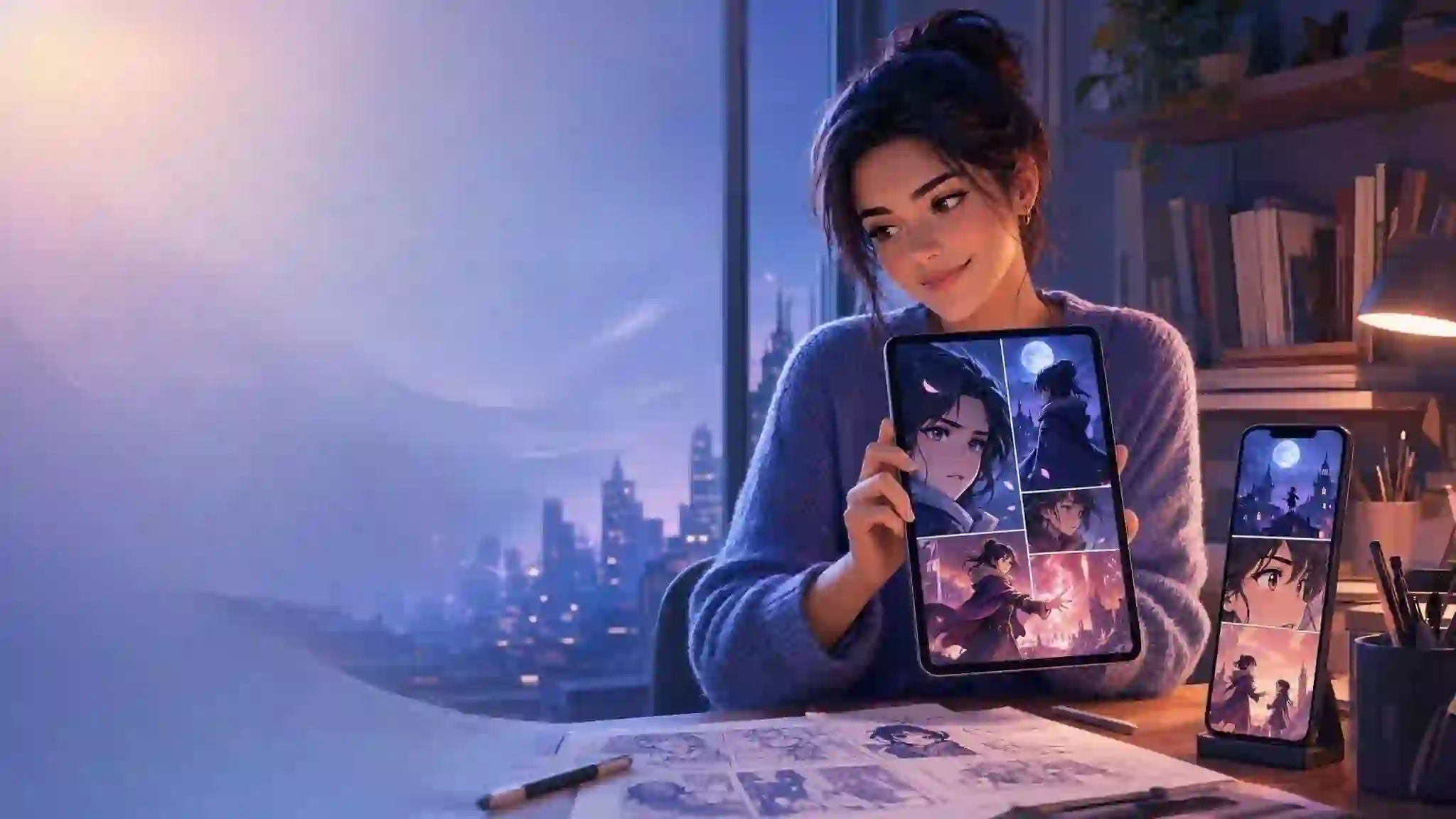
A webtoon is a digital comic designed to be read on a phone, tablet, or computer, often by scrolling down a vertical page. That simple format has changed how readers discover stories and how independent artists reach an audience. This guide explains the format, reading experience, genres, platforms, creation process, publishing choices, and practical ways to find comics worth following. Whether you are new to digital comics or preparing your first series, you will leave with clear next steps.
What is a webtoon?
A webtoon is a comic published primarily for digital reading. The term combines “web” and “cartoon,” and it is commonly used for comics released online, especially those arranged in a vertical-scroll format. Readers move down the screen panel by panel instead of turning printed pages.
The format grew out of South Korea’s online comic culture, but creators and readers now use it around the world. A webtoon may be a romance, fantasy, thriller, comedy, memoir, educational comic, or a mix of genres. Some series are free to read with optional paid access to early episodes; others use subscriptions, advertising, or direct sales.
Not every online comic uses the same layout. Some are adapted from printed pages, while others are designed from the start for mobile screens. The label can describe both the storytelling format and, in everyday speech, the digital-comics category as a whole. A particular brand or platform may also use “Webtoon” as its name, so check context when a search result refers to a service rather than the general format.
How does the vertical-scroll format work?
Traditional comics guide the eye across a page and then to the next page. A vertical comic places panels in a downward sequence. The reader controls the pace by scrolling, while the creator uses spacing, panel size, and color to manage timing.
A gap between two panels can suggest a pause. A long blank section can build suspense before a reveal. A close-up may slow the scene, while a rapid stack of smaller panels can make a conversation feel quick. Creators can also use the full width of a phone screen for dramatic images, though important details should remain legible on smaller displays.
The format brings practical benefits:
- It works naturally with one-handed phone use.
- Readers can follow a story in short sessions.
- Creators can control the pace through scroll distance and panel spacing.
- Episodes can be updated online without printing or shipping.
- New artists can publish digitally without first producing a full printed volume.
There are trade-offs. Long episodes may require substantial scrolling, and tiny lettering becomes difficult to read on a phone. An image that looks clear on a large monitor may lose detail on a narrow screen. A strong creator designs for the actual reading environment rather than simply placing print pages in a tall file.
Webtoon, manga, and traditional comics: what is the difference?
These terms overlap, but they do not mean exactly the same thing. Manga usually refers to Japanese comics or a style associated with them. Comics is the broadest category, covering print and digital work from many regions and traditions. A webtoon is generally defined by its online publication and digital reading experience, especially vertical scrolling.
A manga can be published digitally, and a webtoon can use visual influences associated with manga. A comic can also be adapted from a webtoon into print. The story’s country of origin, art style, reading direction, and publishing format are related but separate characteristics.
| Term | Common meaning | Typical reading format | Useful distinction |
|---|---|---|---|
| Webtoon | Digital comic, often built for online reading | Vertical scroll, commonly mobile-first | Publication format and reader experience are central |
| Manga | Comics from Japan or comics using manga conventions | Often page-based; digital editions also exist | A cultural and publishing category, not just a screen layout |
| Manhwa | Comics from Korea | Print or digital; many contemporary series scroll vertically | A regional category that overlaps with webtoon publishing |
| Manhua | Comics from China and Chinese-language communities | Print and digital formats vary | A broad regional and language category |
| Webcomic | Any comic published online | Scroll, page, or mixed layout | The broad umbrella term for internet-published comics |
| Graphic novel | A book-length comic work or collection | Usually page-based, print or digital | Describes length or book presentation more than platform |
These are general distinctions, not strict rules. Artists borrow techniques across traditions, and publishers may classify the same work in more than one way. When choosing a series, its synopsis, language, reading direction, and episode presentation are more useful than relying on a label alone.
Where can you read webtoons?
Readers can find digital comics on dedicated comic apps, creator platforms, publisher websites, and independent artist pages. Some services curate licensed series, while others let creators upload their own work. Availability, languages, payment rules, age ratings, and regional catalogs differ by service.
Before choosing a platform, consider:
- Catalog: Does it offer the genres and languages you want?
- Reading tools: Can you adjust brightness, save a reading list, or download episodes for offline use?
- Payment model: Are episodes free, supported by ads, available through a subscription, or sold individually?
- Creator support: Does the service explain how artists earn money and retain rights?
- Accessibility: Are text, contrast, captions, and navigation comfortable for you?
- Privacy and safety: Review account settings, content controls, and the platform’s privacy information.
Use official apps or authorized websites where possible. Unofficial copies can expose readers to intrusive ads, unsafe downloads, poor translations, or content posted without the creator’s permission. Supporting legitimate releases helps sustain the people who make the work.
How to choose a series you will enjoy
A popular title is not automatically the right title for every reader. Start with a subject or mood you already enjoy. If you like intricate worlds, try fantasy or science fiction. If you prefer character relationships, explore romance, drama, or slice of life. Readers who enjoy tension may look for mystery, horror, or action.
Use this quick selection process:
- Read the short description and check the genre tags.
- Look at the first episode, not only the cover art.
- Check the age rating and content notes.
- Read a few reader comments, while remembering that taste is subjective.
- See whether the series is ongoing or complete.
- Try two or three episodes before deciding whether the pacing works for you.
A series may take time to establish its characters and central conflict. At the same time, you do not need to continue a story that is not holding your attention. Use bookmarks, subscriptions, or reading lists to keep track of the titles you want to revisit.
Popular genres and story styles
The digital-comics ecosystem is broad, and genre labels often overlap. A romance may include fantasy world-building; a thriller may also be a family drama. These familiar categories can help readers navigate a large catalog.
- Romance: Relationships, emotional change, and obstacles to intimacy.
- Fantasy: Magic, imagined societies, myths, and speculative worlds.
- Action: Physical conflict, high-stakes goals, and fast-paced scenes.
- Drama: Personal choices, family tension, ambition, or social pressures.
- Comedy: Situations, character quirks, satire, or visual jokes.
- Thriller and mystery: Secrets, investigations, danger, and carefully timed revelations.
- Horror: Unease, fear, the uncanny, or psychological tension.
- Slice of life: Everyday relationships, routines, and small turning points.
- Science fiction: Technology, future societies, space, or speculative science.
- Memoir and nonfiction: Real experiences, explanations, history, or practical subjects told through comics.
Genre descriptions are a starting point, not a promise. Check the episode summary and content notes before reading, especially if you want to avoid particular themes.
How to read comfortably on a phone
A good reading setup makes a long episode easier on the eyes and hands. Set a comfortable screen brightness, choose a font or display setting if the app offers one, and take breaks during extended sessions. If the artwork or lettering looks too small, try rotating the device or using a tablet rather than zooming in on every panel.
Keep the app updated through an official store, and use account controls to manage notifications. If you read in a public place, consider whether episodes contain material you would rather view privately. For younger readers, use available age filters and discuss online safety and purchases with a trusted adult.
Reading accessibility matters. High contrast can improve legibility, while flashing effects or dense visual patterns may be uncomfortable for some readers. Creators can help by keeping dialogue readable, avoiding essential information conveyed only through color, and adding clear descriptions where a platform supports them.
How to create a webtoon: from idea to episode
A successful comic begins with a story readers can follow, not with expensive equipment. You can start with paper sketches, a basic drawing application, or a tablet. The most important early work is deciding what the series is about, who it is for, and why its next episode will make a reader continue.
1. Define the premise
Write the central idea in one or two sentences. Identify the protagonist, their goal, the main obstacle, and what makes the situation distinctive. A useful premise is specific enough to suggest scenes and flexible enough to support more than one episode.
“A student solves mysteries,” for instance, is a general statement. A sharper premise might identify the unusual setting, personal stakes, or a rule that complicates each case. Do not confuse complexity with originality; a clear, familiar setup can feel fresh when the characters and choices are particular.
2. Know the intended audience
Decide the age range, genre, reading language, and tone. This helps guide dialogue, subject matter, episode length, and content notices. Audience research should inform your choices without turning the story into a copy of whatever is currently popular.
Look at several works in the same category and ask practical questions: What does the opening establish? How quickly does the conflict appear? What makes the characters memorable? Use those observations to understand reader expectations, then develop your own approach.
3. Build characters and a story plan
Give central characters goals, limits, and reasons to change. A character who only reacts to events can feel passive; a character who makes choices creates forward motion. Keep a simple reference sheet with names, relationships, visual features, and relevant background details so episodes remain consistent.
Plan the story at two levels. First, sketch the larger arc: the beginning, major turning points, climax, and likely ending. Then outline the next few episodes in more detail. This balance provides direction while leaving room to improve the story as you learn what works.
4. Write for scrolling
Draft the episode as a sequence of visual beats. Decide what the reader sees, what the characters say, and what information each panel adds. Use a pause or a change in spacing when you want a moment to land. Avoid repeating in dialogue what the artwork already makes obvious.
An episode should have a small sense of movement even when it is part of a larger story. It may reveal a clue, deepen a relationship, introduce a complication, or change a character’s plan. A strong ending gives readers a reason to return, but it should not rely on a misleading cliffhanger every time.
5. Sketch, letter, and revise
Create rough thumbnails before polishing the art. Thumbnails help test the order of panels and whether a scene reads clearly as the viewer scrolls. Then draw the final panels, add dialogue, and check the result at phone size.
Revision should cover both story and presentation:
- Can a new reader understand who is speaking?
- Is the lettering large enough on a small display?
- Does the reader know where to look next?
- Are important expressions and actions visible?
- Does each panel contribute something?
- Does the episode end at a satisfying point?
A friend who is unfamiliar with the story can reveal confusing transitions that the creator no longer notices. Get detailed input by asking questions like “Where did you lose track of the action?” instead of “Did you like it?”
6. Prepare files and publish carefully
Each platform sets its own image dimensions, file-size limits, upload rules, and content policies. Read the current creator instructions before exporting. Keep layered source files and backups in a separate location, and export a smaller copy for upload when required.
Before publishing, check spelling, panel order, image quality, and episode title. Add a short description, suitable genre tags, and accurate content notes. Do not use another artist’s work, music, photographs, fonts, or characters unless you have the necessary rights or permission.
Planning a release schedule
Consistency helps readers know when to expect an update, but an unrealistic schedule can damage both quality and health. Estimate the time needed for writing, sketching, final art, lettering, editing, and uploading. Then choose a schedule you can maintain during busy weeks, not just an ideal week.
Many creators prepare a small episode buffer before launch. A buffer gives you flexibility if illness, study, work, or a complex scene delays production. If you need to pause, communicate clearly and update readers when you can. A candid schedule note is more useful than promising dates you cannot meet.
For a new creator, a manageable routine might include:
- A fixed weekly writing or planning session.
- A realistic number of panels per work session.
- A recurring review of audience feedback.
- A monthly backup of project files.
- A planned rest period between larger story arcs.
Treat reader response as information, not as a command. Views, likes, and comments can indicate that a title is reaching people, but they do not measure the full value of a story. Look for patterns over time and prioritize thoughtful feedback that aligns with your goals.
How webtoons can support learning and communication
Comics combine words, images, sequence, and emotion. That makes them useful for more than entertainment. Teachers, nonprofits, and subject specialists can use comic storytelling to introduce a process, explain a historical event, or make an unfamiliar concept easier to discuss.
An educational comic still needs accuracy. The creator should distinguish documented facts from fictional scenes, identify reliable references during research, and ask a qualified subject expert to review specialized material. Images can simplify complex ideas, but oversimplification may create misconceptions. A short note about sources or further reading can help readers continue learning.
The format can also make personal experiences visible. Memoir comics may help readers connect with an individual perspective, but one person’s story should not be presented as proof that everyone in a group has the same experience. Careful framing and respect for privacy are essential when a comic depicts real people or sensitive events.
Common mistakes new creators can avoid
New creators often spend too long perfecting the first episode and too little time planning the next one. A polished opening is valuable, but a simple workflow and sustainable production plan are what make a series possible over time.
Other frequent problems include:
- Unreadable lettering: Test text at phone size before uploading.
- Unclear panel order: Use spacing and composition to guide the downward reading path.
- Too much exposition: Let actions and visual details carry part of the story.
- An oversized cast: Introduce characters gradually and give each a clear purpose.
- Inconsistent updates: Choose a schedule that allows for real life and revisions.
- Vague episode endings: Give each installment a turn, question, or emotional beat.
- Ignoring platform specifications: Check upload requirements before final export.
- Chasing metrics at any cost: Build for the intended reader, not only short-term clicks.
- Using unlicensed assets: Confirm permissions before publication.
These are fixable craft issues. Review one episode at a time, choose a specific improvement, and apply it in the next update. Gradual learning is more reliable than trying to master every part of production at once.
A practical launch checklist
Use this list before releasing a new series or episode:
| Check | What to confirm |
|---|---|
| Story | The premise, protagonist, and immediate conflict are clear |
| Audience | Genre, age range, tone, and content notes fit the intended readers |
| Mobile readability | Lettering, panel detail, and contrast work on a small screen |
| Sequence | The scroll path is clear and transitions make sense |
| Episode value | The installment changes something or rewards the reader |
| Files | Dimensions, format, and file size meet platform requirements |
| Rights | Art, fonts, references, and collaborator contributions are cleared |
| Description | Summary and tags describe the series accurately |
| Schedule | The release plan is achievable and includes room for delays |
| Backup | Editable files and final exports are safely stored |
| Community | Comment, privacy, and moderation settings are understood |
| Review | A fresh reader has checked for confusing moments and errors |
A checklist cannot guarantee an audience, but it reduces preventable problems and gives you more time to focus on the story.
Frequently asked questions
1. What does “webtoon” mean?
A webtoon is a comic published online, commonly designed for vertical scrolling on a phone. The term can refer to the general digital-comic format or, depending on context, to a particular branded service.
2. Is a webtoon the same as manga?
No. Manga usually refers to Japanese comics or manga-influenced work, while webtoon describes online publication and a digital reading format. A manga can be released digitally, and a webtoon can draw on many visual traditions.
3. Are webtoons free to read?
Some series are free, while others use advertising, paid early access, subscriptions, or individual purchases. The model depends on the creator and platform, so check the listing and payment terms before buying.
4. Can beginners make a webtoon?
Yes. Beginners can start with a short story, simple tools, and a realistic schedule. Focus first on clear storytelling, readable lettering, and an episode you can complete; improve your art and workflow with practice.
5. What app or platform should I use?
Choose an official service with the genres, languages, reading tools, and payment options you prefer. Creators should also compare upload specifications, content policies, rights terms, audience tools, and monetization conditions before committing.
6. How long should a webtoon episode be?
There is no universal ideal length. Make an episode long enough to deliver a meaningful scene or story beat, but short enough to remain readable on a phone. Platform guidance and reader response can help you refine your pacing.
Final thoughts: start reading or make your first episode
Digital comics reward both curiosity and craft. As a reader, explore beyond one genre, support authorized releases, and give a promising series a fair first look. As a creator, begin with a clear premise, plan for the vertical screen, and build a schedule that respects your time and your readers.
Choose one practical next step today: save a series to read, outline a short story, or test a page on your phone. A thoughtful start is more valuable than waiting for perfect conditions. Keep learning from each episode, and let your own point of view shape what you make.