My Slain Dragon Bride Scan 3: What Does Chapter 3 Reveal?
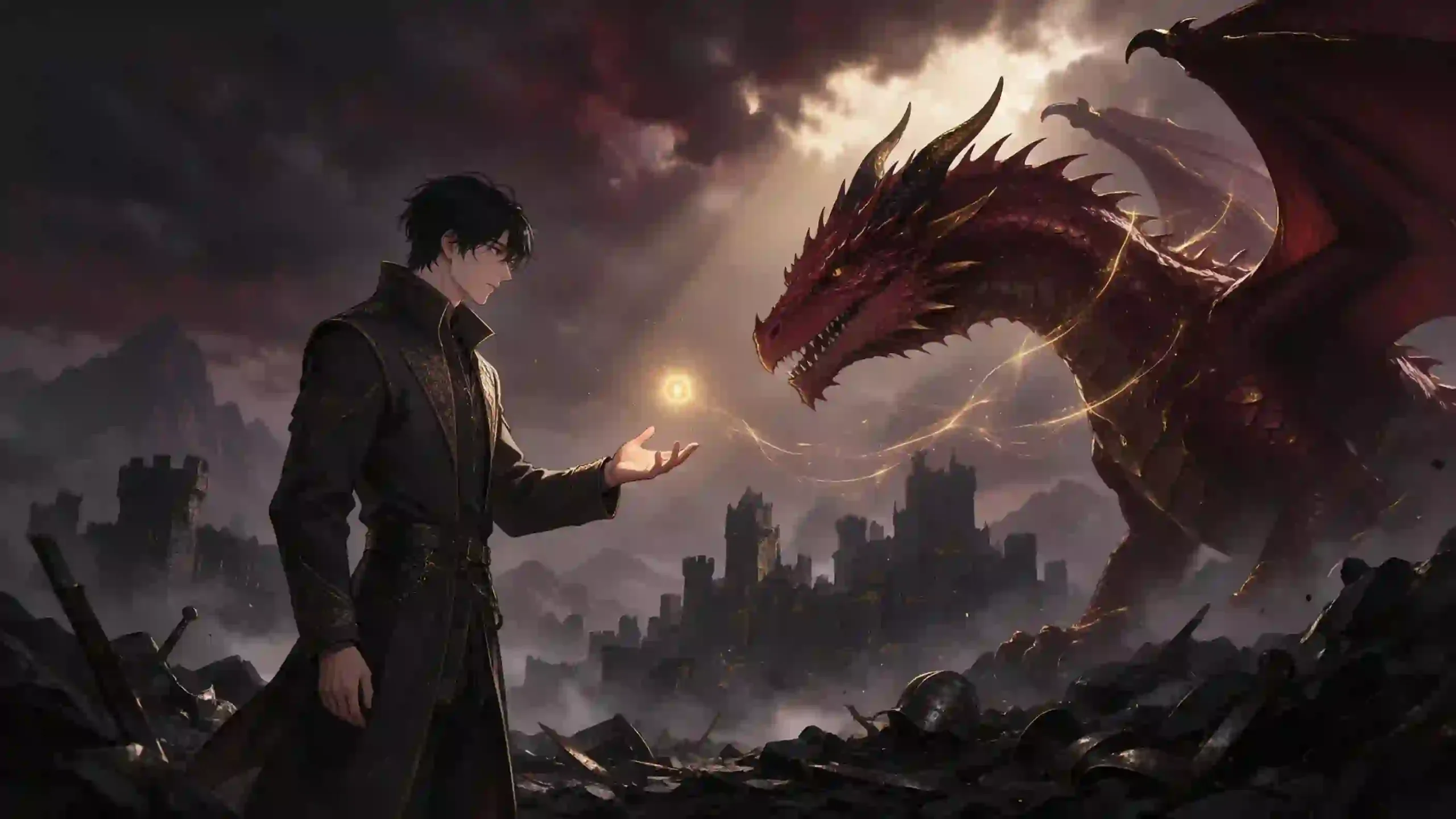
Searching for My Slain Dragon Bride Scan 3 can be confusing when the series appears under different English titles and unofficial translations. Readers may also find the novel and webtoon mixed together. This guide clears up the names, explains the story’s central conflict, and shows you how to find the original Korean chapter without mistaking speculation for confirmed plot details.
What Is My Slain Dragon Bride Scan 3?
My Slain Dragon Bride Scan 3 is a search phrase readers use to find the third chapter of the Korean fantasy webtoon also known as I Married the Dragon I Killed.
The official Korean title is 내가 죽인 드래곤과 결혼했다. NAVER Webtoon lists its third episode as 반려가 될 자의 의무, which can be translated approximately as “The Duty of One Who Will Become a Partner.” English chapter titles may differ between translations.
The phrase “scan 3” does not establish that a particular English version is official. It usually refers to an online chapter or translated scan, so check the publisher and rights information before choosing where to read.
My Slain Dragon Bride Scan 3: Quick Facts
| Detail | What readers should know |
|---|---|
| Common English title | My Slain Dragon Bride |
| Alternative English title | I Married the Dragon I Killed |
| Original Korean title | 내가 죽인 드래곤과 결혼했다 |
| Format | Korean webtoon, also called a manhwa |
| Original platform | NAVER Webtoon |
| Chapter discussed | Webtoon episode 3 |
| Korean episode title | 반려가 될 자의 의무 |
| Approximate title meaning | “The Duty of One Who Will Become a Partner” |
| Official listing date | July 27, 2026 |
| Webtoon writing credit | Mandutbul, listed as 만둣불 |
| Webtoon art credit | Jelling, listed as 젤링 |
| Original story credit | Bunjaenamu, listed as 분재나무 |
| Main story elements | Dragons, magic, regret, a second chance, and an engagement |
| Reading caution | English translation rights and availability should be checked separately |
Source for official title, credits, chapter listing, and date: NAVER Webtoon’s Korean series page.
What Happens in My Slain Dragon Bride Scan 3?
The official listing identifies the third episode and gives it a title about the duty of a future partner. It does not, by itself, confirm a full sequence of events within the chapter.
That distinction matters. A chapter title can suggest a subject, but it cannot prove which conversations, characters, or actions appear in the episode.
For a reliable recap of My Slain Dragon Bride Scan 3, read the original chapter or a verified licensed translation. Then check the following:
- Who appears in the episode?
- What does each character actually say or do?
- Which event changes the situation established in chapter 2?
- Does the chapter explain a duty, promise, or expectation?
- What question does the ending leave for chapter 4?
This guide explains the confirmed premise and offers reading questions below. It does not invent chapter scenes to fill the gaps.
What Is the Story About?
The series begins with a fantasy premise built around a painful discovery: a man reaches for extraordinary magical power, only to confront the human cost of the path he has chosen.
The official synopsis describes the Ninth Circle as a level associated with near-divine power. The final key is the heart of the red dragon Valdrova. Instead of resisting, Valdrova willingly gives up her heart, leaving the protagonist troubled by what he has done and by the depth of her despair.
The broader premise involves a second chance. Rather than treating the engagement and the dragon as parts of the same story he already knows, the protagonist has a chance to make different choices.
The result is more than a simple battle between a mage and a dragon. The central tension comes from what the protagonist thought he understood, what he learns too late, and whether a different future can grow from that knowledge.
Why Is the Dragon’s Heart Important?
The dragon’s heart matters because it connects the story’s magic system to its emotional conflict.
On one level, it is the key to a higher circle of magic. To a character focused only on power, it could look like a prize at the end of a difficult journey.
On another level, the heart belongs to Valdrova. Her willingness to surrender it forces the protagonist to face the difference between gaining power and understanding the person harmed by that pursuit.
That contrast gives the premise its force. A victory can be real in one sense and devastating in another.
What is the Ninth Circle?
The Ninth Circle is presented in the official synopsis as an exceptional level of magical power. The description compares that level to the realm of a demigod.
The synopsis does not explain every rule of the magic system. Readers should avoid assuming that each translation uses the same terms or that all details about the circles are established in the opening description.
Is the heart only a magic object?
No. It has a practical role in the quest for power, but it also represents the cost of the protagonist’s actions.
The story’s most striking question is not simply whether he can reach the Ninth Circle. It is what he learns when the dragon he expected to oppose him responds in a way he did not understand.
Who Is Valdrova?
Valdrova is the red dragon named in the official Korean synopsis and a central figure in the story’s premise. She is also connected to the protagonist through their engagement.
Her role challenges the expectation that a dragon must be a straightforward enemy. The synopsis presents her as powerful, but it also points to an older and deeper despair that the protagonist has failed to grasp.
Readers should distinguish between what the opening premise establishes and what later chapters reveal. Valdrova’s motives deserve attention, but a reader should not treat every theory about them as confirmed fact.
Why does Valdrova’s response matter?
Her response unsettles the protagonist’s understanding of their conflict. If he expected resistance, her choice leaves him with a question that power alone cannot answer: Why did she give him what he came to take?
That question creates room for readers to reconsider both characters. It also makes their relationship important to the story, not merely a background detail.
Who Is the Male Lead?
English-language listings identify the protagonist as Ferda, although translations and transliterations can vary. Readers may encounter another spelling, including Perda, in discussions of the series.
He is a mage whose pursuit of power leads him toward Valdrova’s heart. The wider premise then gives him an opportunity to approach his life and engagement differently.
When reading a new translation, check whether unfamiliar names refer to new characters or simply use different spellings. This is especially useful when comparing discussion posts, novel listings, and webtoon chapters.
Why Is the Engagement Central to the Story?
The engagement matters because it ties the protagonist’s future to the dragon at the center of his past tragedy. It is both a relationship and a situation shaped by expectations.
The official title places marriage beside an act of killing. That contrast creates the story’s central hook: how can someone build a future with a person whose death is part of his past?
The answer cannot come from the title alone. Readers need to watch how the characters speak, what they choose, and whether their actions change as the story continues.
Does an engagement mean the characters already trust each other?
Not necessarily. An engagement can create an obligation without creating affection or trust.
That gap is useful to keep in mind when reading My Slain Dragon Bride Scan 3. A title about a future partner’s duty raises an interesting question, but readers should let the chapter itself show what that duty means.
Is My Slain Dragon Bride a Regression Story?
Yes. The original NAVER Webtoon listing includes regression among its story tags, and the premise centers on a chance to revisit an earlier point in the protagonist’s life.
In fiction, regression usually means a character returns to an earlier time while retaining knowledge or memories from a later experience. That knowledge can help the character make different decisions, but it does not automatically make those decisions easy.
A second chance also creates tension for the reader. The protagonist may know something others do not, while the people around him still have their own needs, fears, and reasons for acting.
Regression, reincarnation, and time travel: What is the difference?
| Term | Simple meaning | Why it matters here |
|---|---|---|
| Regression | Returning to an earlier point in one’s own life | It describes the story’s second-chance structure. |
| Reincarnation | Beginning life again, often in a new body or identity | It is not automatically the same as regression. |
| Time travel | Moving between points in time | It is a broad term that can include several different story devices. |
| Alternative timeline | A changed sequence of events | It can be a useful way to discuss consequences, but readers should not assume every rule of the timeline without evidence. |
The safest approach is to use the label supported by the original listing and explain the story in plain language. Technical terms matter less than the choices the second chance allows.
What Does “Scan” Mean in My Slain Dragon Bride Scan 3?
In online comics discussions, “scan” often refers to a digital copy or a translated version shared on a reading site. The term may also appear in the names of fan translation groups.
It does not guarantee that a release is licensed, accurate, complete, or safe. Two sites using the same chapter number can offer different translations or image quality.
Before reading, check:
- The series title: Confirm the Korean title or creator credits.
- The format: Make sure you are opening the webtoon, not the novel.
- The chapter number: Look for episode 3 in the official list.
- The language: A Korean original and an English translation may use different titles.
- The publisher: Look for clear licensing or rights information.
- The site’s behavior: Avoid pages that demand unexpected downloads or sensitive information.
If a site does not explain who publishes the translation, treat its official status as unverified.
Where Can You Read the Original Korean Chapter?
The original Korean webtoon is listed on NAVER Webtoon under 내가 죽인 드래곤과 결혼했다. Search for that title on the platform, open the series page, and select episode 3.
The official list identifies the third episode as 반려가 될 자의 의무. Availability, payment requirements, and access features can change, so check the current listing before reading.
If you do not read Korean, look for a clearly licensed translation in your region. This draft does not confirm that an official English edition is available, so do not assume that every English scan is authorized.
How to check whether a translation is official
A licensed release should provide enough information to identify its publisher and the work it is presenting. Start with the original publisher’s notices and recognized publishing platforms.
Also compare the title, artwork, creator credits, and series description. A familiar title alone is not proof of authorization, particularly when several sites use the same English name.
Is My Slain Dragon Bride Scan 3 Free to Read?
The answer depends on the platform, region, language, and current access rules. The existence of an episode listing does not guarantee that every reader can access it for free.
Check the official chapter page for its present terms. Some platforms offer free chapters, previews, paid access, or time-based access, and those conditions may change.
A site advertising a free version also does not prove that it has permission to publish it. Supporting an authorized release helps direct credit and revenue toward the people who created the work.
Is the Webtoon the Same as the Original Novel?
The webtoon is an adaptation of an original story, but it is not safe to assume that chapter 3 of the webtoon matches chapter 3 of the novel.
The official webtoon listing credits Bunjaenamu for the original work, Mandutbul for the webtoon’s writing, and Jelling for its art. A comic adaptation can change pacing, divide material differently, or communicate information through images instead of prose.
If you switch formats, use the story events—not just the chapter numbers—to find your place. Confirm the edition and translation before sharing a chapter comparison with other readers.
Which version should you read first?
Choose the webtoon if you enjoy visual storytelling, character expressions, and vertical scrolling. Choose the novel if you prefer prose and want to explore the original written format.
You can also enjoy both. Just remember that an adaptation and its source may present the same material at different speeds.
What Should Readers Notice in Chapter 3?
Because a full, verified scene-by-scene recap is not available in the source material used for this draft, the most useful approach is to read the episode with a few focused questions.
1. What does the chapter mean by “duty”?
The Korean episode title points toward a duty connected to becoming a partner. Look for who defines that duty and whether the characters agree about it.
A duty can be a formal rule, a personal promise, or someone’s expectation. Those meanings can lead to very different interpretations.
2. Who has power in each conversation?
Valdrova’s strength as a dragon is one kind of power. Social position, information, magical ability, and the ability to make choices can also shape a scene.
Notice who asks questions, who gives answers, and who can refuse a request. These details can reveal more about a relationship than a simple label such as “hero” or “bride.”
3. What does the protagonist know that others may not?
A regression story gives the lead a different perspective from the people around him. His knowledge can make an ordinary conversation feel important to him even when another character sees it differently.
That difference does not mean his interpretation is always correct. Readers can compare what he believes with what other characters actually say and do.
4. Does the art add meaning to the dialogue?
In a webtoon, expressions, spacing, color, and the order of panels can affect how a moment feels. A pause between two lines may communicate doubt, surprise, or discomfort.
Look at the visual sequence before deciding that a character’s words tell the whole story. A later translation may also choose different wording for the same moment.
5. What remains unanswered?
A good early chapter does not need to explain every mystery. Make a note of questions the episode raises, and separate them from answers you already know.
This habit is especially helpful when reading discussions about My Slain Dragon Bride Scan 3. Readers who have continued into later chapters may know more than someone reading the third episode for the first time.
What Are the Main Themes of My Slain Dragon Bride?
The premise brings several familiar fantasy ideas together, but its central questions are easy to follow.
Regret and responsibility
The protagonist’s achievement does not erase the damage attached to it. His discomfort after taking Valdrova’s heart suggests that winning and doing the right thing are not always the same.
A second chance makes responsibility more difficult, not less. Knowing that a past choice hurt someone raises the question of what he will do differently.
Trust and misunderstanding
The official synopsis makes clear that the protagonist did not understand the depth of Valdrova’s despair. That gap between what he believed and what she experienced is central to the premise.
Trust requires more than a change in intention. It also depends on listening, consistent actions, and space for the other person to make choices.
Power and its cost
The Ninth Circle represents an extraordinary goal. The dragon’s heart makes that goal personal.
Fantasy stories often ask whether a character is strong enough to gain power. This premise also asks whether the character understands the cost of gaining it.
A future that is not yet settled
The engagement suggests a possible future, while the earlier tragedy shows how badly things can go. The tension lies in the distance between those two outcomes.
Readers can follow that tension without assuming the ending. The interesting question is not only whether the future changes, but how the characters respond to each new choice.
Why Do Readers Search for Different Titles?
The same Korean work can appear under several English names because titles are translated, adapted, and shared across platforms in different ways.
For this series, readers may encounter:
- My Slain Dragon Bride
- I Married the Dragon I Killed
- 내가 죽인 드래곤과 결혼했다
- A romanized version of the Korean title
A translated title can emphasize different parts of the premise. One version may focus on the bride, while another highlights the act of marrying the dragon.
When in doubt, use the original Korean title and creator credits to identify the series. This is more reliable than assuming two English names always refer to different works.
Is Chapter 3 a Good Place to Start?
Chapter 3 is easier to understand after chapters 1 and 2. The opening episodes establish the premise, introduce the characters, and give context to the engagement.
If you start with My Slain Dragon Bride Scan 3, you may recognize the fantasy setting but miss why the protagonist’s choices carry so much weight. Beginning with the first episode also lets you form your own view before encountering later spoilers.
A simple reading order is:
- Read webtoon episode 1.
- Continue to episode 2.
- Read episode 3.
- Revisit the official series description if a term or name is unclear.
- Continue to episode 4 when you are ready.
If you later try the novel, treat it as a separate reading experience rather than assuming its numbered chapters line up with the webtoon.
How Can You Discuss the Chapter Without Spoiling It?
Start by telling other readers which episode and edition you are discussing. A chapter number alone may not be enough when a novel and a webtoon share the same title.
For a spoiler-friendly discussion, describe the scene you want to discuss before offering your interpretation. For a spoiler-free discussion, focus on broad themes such as trust, duty, regret, or the art style.
Useful questions include:
- What does the title lead you to expect?
- Which character’s point of view did you understand best?
- Did a visual detail change how you read a conversation?
- What do you think a healthy partnership would require in this situation?
- Which question would you like the next episode to answer?
Avoid presenting a theory as a confirmed future event. If you know more from later chapters or the novel, mark that information clearly before sharing it.
Frequently Asked Questions
1. What is My Slain Dragon Bride Scan 3?
My Slain Dragon Bride Scan 3 usually refers to the third chapter of the Korean fantasy webtoon. The original Korean episode is listed on NAVER Webtoon.
2. What is the official title of chapter 3?
NAVER lists episode 3 as 반려가 될 자의 의무. An approximate English translation is “The Duty of One Who Will Become a Partner.”
3. When was the third webtoon episode listed?
The official NAVER Webtoon listing dates episode 3 to July 27, 2026. Translation release dates may differ.
4. Is I Married the Dragon I Killed the same series?
Yes. I Married the Dragon I Killed and My Slain Dragon Bride are English titles used for the Korean work 내가 죽인 드래곤과 결혼했다.
5. Is the webtoon based on a novel?
Yes. The official webtoon listing credits Bunjaenamu for the original work. The webtoon and novel may differ in pacing and chapter divisions.
6. Is there an official English translation?
An official English release was not confirmed for this draft. Check the original publisher and established licensed platforms for current regional availability.
Read the Chapter and Form Your Own View
The appeal of My Slain Dragon Bride Scan 3 lies in the question behind the fantasy: what does someone owe the person they once failed to understand?
Start with the official Korean series listing, read the opening episodes in order, and pay attention to the difference between a character’s intentions and actions. Then share your interpretation of duty, trust, and second chances—while giving other readers room to discover the story for themselves.