Why Was God Emperor Doom a God? The Complete Marvel Guide
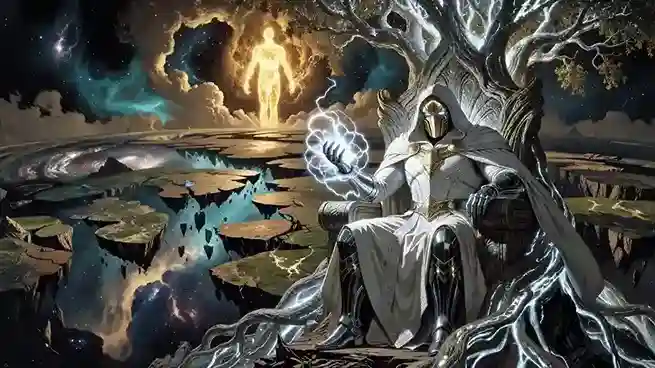
TL;DR: During Marvel’s 2015 Secret Wars storyline, Victor Von Doom stole the cosmic power of the Beyonders to save remnants of a dying multiverse. Rebuilding existence into a patchwork planet called Battleworld, he ruled for eight years as an omnipotent deity before admitting Reed Richards would have used that power better.
What happens when Marvel’s greatest supervillain actually wins? You don’t get endless chaos or senseless destruction. Instead, when God Emperor Doom became a God, the Marvel Multiverse got its only chance at survival. While the heroes of Earth-616 and Earth-1610 fought desperately to stop reality from collapsing, Victor Von Doom quietly built a plan to steal the power of the universe’s architects and stitch the broken pieces back together.
If you’ve seen panels of Doom ripping Thanos’s spine out with a single hand or heard rumors about how he’ll shape upcoming Marvel Studios films like Avengers: Doomsday and Avengers: Secret Wars, you’re in the right place. In this guide, you’ll learn how Victor achieved absolute omnipotence, how his patchwork world operated, what limits kept him human underneath the white armor, and why his greatest triumph still ended in defeat.
Quick Overview
- First Full Appearance: Secret Wars #2 (May 2015), written by Jonathan Hickman with art by Esad Ribić.
- Source of Power: The combined cosmic energy of the Beyonders, channeled through Owen Reece (Molecule Man).
- Domain: Battleworld, a single patchwork planet made from surviving fragments of destroyed alternate Earths.
- Right-Hand Allies: Sheriff Stephen Strange, Sue Storm (his royal consort), and the Thor Corps police force.
- Core Weakness: Deep-seated psychological insecurity toward his lifelong rival, Reed Richards (Mister Fantastic).
- Reading Essentials: Avengers (2012), New Avengers (2013), and Secret Wars #1–9 (2015–2016).
Who Is Victor Von Doom in His Omnipotent Form?
Definition: God Emperor Doom is the supreme, reality-warping version of Doctor Victor Von Doom who ruled the remnants of the Marvel Multiverse during the 2015 Secret Wars comic event. By absorbing the power of the Beyonders—beings who existed outside the multiverse—Doom gained near-infinite control over matter, energy, space, and memory, rebuilding shattered alternate realities into a single realm called Battleworld.
To understand why this version of Victor stands apart from every other cosmic villain in comic history, you first have to understand how Victor sees himself. Most villains chase power out of greed, revenge, or nihilism. Thanos wanted to court Death; Galactus feeds out of cosmic necessity; Kang conquers to satisfy his ego across time. Victor, however, genuinely believes that humanity cannot survive without his strict, benevolent hand guiding it.
When every superhero team failed to stop the multiverse from dying, Victor stepped into the void. He didn’t become a tyrant just to hear people chant his name—though his ego certainly enjoyed the worship. He took the throne because literally nothing else existed anymore. Without his intervention, every hero, villain, and civilian across infinite Earths would have vanished into white nothingness.
Visually, writer Jonathan Hickman and artist Esad Ribić redesigned Victor to reflect this shift from monarch to deity. Gone was his classic green cloak and cold grey steel. In its place, he wore pristine white tunics and silver-white armor, symbolizing purity, absolute authority, and divine rebirth. Yet beneath the shining mask, his face remained horribly scarred—a quiet visual clue that even with all the power in creation, Victor couldn’t heal his own deepest flaws.
Why does that detail matter so much to readers? Because if an all-powerful ruler still hides behind an iron mask, you immediately know something is broken inside him. That tension between infinite cosmic might and fragile human pride drives every single page of his reign.
How Did Victor Von Doom Steal the Power of the Beyonders?
Before Victor could sit on a divine throne, the entire Marvel Multiverse had to die through a crisis known as the Incursions. Across infinite parallel universes, Earths began colliding with one another. Whenever two Earths touched, both entire universes were wiped out instantly. The only way to save two colliding universes was to destroy one of the Earths before impact.
While the Illuminati—Iron Man, Reed Richards, Black Panther, Namor, Beast, and Black Bolt—broke their own moral codes trying to blow up uninhabited Earths, Victor went looking for the root cause. Why were the universes collapsing in the first place? Working alongside Doctor Strange and the unstable powerhouse Owen Reece, better known as Molecule Man, Victor discovered a chilling cosmic trap.
What Was the Molecule Man Bomb?
Twenty-five years earlier in real-world publishing history, Owen Reece gained his matter-manipulating powers through a lab accident connected to the Beyonders, an enigmatic race of ivory-skinned cosmic entities operating from outside the multiverse. During Jonathan Hickman’s New Avengers run, Molecule Man revealed a horrifying truth to Victor: Owen wasn’t unique. Every single universe in the multiverse contained an identical version of Owen Reece, and the Beyonders had designed every single one of them as a living time bomb.
If every Owen Reece detonated at the exact same moment, the entire Marvel Multiverse would be vaporized in one synchronized experiment. The Beyonders weren’t angry or evil; they were simply curious scientists clearing out their petri dish to see what would happen. How do you stop a race of beings so strong that just three of them effortlessly slaughtered the Living Tribunal, Eternity, Infinity, and every Celestial in existence?
You beat them at their own game before their timer hits zero. Here is the exact step-by-step breakdown of how Victor outsmarted the architects of reality:
- Building a Cult Across Realities: Adopting the secret identity of “Rabum Alal” (The Great Destroyer), Victor traveled backward through time and across parallel dimensions with Earth-616’s Molecule Man. Together, they hunted down thousands of alternate-universe Molecule Men and killed them early, defusing parts of the Beyonders’ bomb—which ironically triggered the early Incursions.
- Constructing a Living Bomb of His Own: As the final universes collapsed, Victor gathered thousands of remaining Molecule Men into a specialized containment vessel. Because each Owen Reece shared a quantum link to the Beyonders’ native energy, combining thousands of them created a bomb capable of hurting the Beyonders directly.
- Confronting the Ivory Kings: Joined by Doctor Strange and Earth-616’s Molecule Man, Victor stepped outside time and space to face the Beyonders face-to-face. He hurled his weapon straight into their ranks, tearing apart their physical forms and unleashing an ocean of raw, unshaped omnipotence.
- Accepting the Burden Strange Refused: Somebody had to absorb that loose energy before it dissipated into nothing. The Beyonders offered it, or rather left it exposed, and Doctor Strange hesitated—terrified of what infinite power would do to a mortal soul. Victor didn’t blink. Using Owen Reece as a living conduit, Victor took the full force of the Beyonders’ might into himself.
Think about the sheer audacity of that moment. Strange, the Sorcerer Supreme, froze when faced with ultimate responsibility. Victor stepped forward because, in his mind, Victor Von Doom was the only mind vast enough not to go insane under the weight of infinity.
How Did Battleworld Work Under Doom’s Rule?
Once the final two universes—Earth-616 (the classic Marvel Universe) and Earth-1610 (the Ultimate Universe)—collided and perished, nothing remained except cold void and floating debris. Victor couldn’t resurrect the infinite multiverse as it once was; either his control over the stolen power wasn’t refined enough yet, or deep down he preferred a smaller, manageable kingdom. Instead, he pulled forty-one surviving chunks of dead realities out of the abyss and fused them into a flat, sprawling patchwork planet called Battleworld.
Imagine taking forty-one jagged puzzle pieces from completely different board games and gluing them onto one table. In one territory, the Age of Apocalypse never ended. Right across the border wall, 1990s X-Men animated continuity thrived in Westchester, while neighboring domains held the futuristic neon skyscrapers of 2099, the Victorian streets of 1602, the irradiated wasteland of Old Man Logan, and the gamma-soaked monsters of Greenland.
How Were Laws Enforced Across Battleworld?
Holding forty-one incompatible worlds together required rigid medieval feudalism mixed with divine law. At the center of the planet stood Doomstadt, the royal capital, anchored by Castle Doom—which grew literally out of the roots of Yggdrasil, the World Tree. Every citizen on Battleworld was taught a single creation myth from birth: there was nothing before Battleworld, Victor created the light and the land with his bare hands, and questioning his divinity was punishable by exile or death.
Even physics bowed to his aesthetic preferences. Battleworld didn’t orbit a natural sun. Whenever Victor wanted daylight, he kept Johnny Storm—the Human Torch of the Fantastic Four—suspended high in the atmosphere as a blazing, captive star after Johnny rebelled against him in the early days of the planet’s creation. Every time people looked up for warmth, they were unknowingly staring at one of Victor’s oldest enemies serving an eternal sentence.
To keep order across dozens of superpowered kingdoms, Victor instituted three main pillars of governance:
- The Barons and Baronesses: Each domain had a handpicked ruler—like Maestro, Apocalypse, Sinister, or Madelyne Pryor—who enjoyed total autonomy inside their borders as long as they paid tribute to Doomstadt and kept their citizens from crossing domain walls.
- Sheriff Stephen Strange: The only friend who remembered the old multiverse alongside Victor, Strange acted as Prime Minister, Chief Justice, and investigator. While Victor grew weary of daily bureaucracy, Strange quietly handled disputes so his friend wouldn’t obliterate entire cities out of annoyance.
- The Thor Corps: Instead of one Odinson, hundreds of alternate-reality Thors swore fealty to Victor rather than Odin. Each carried a Mjolnir forged with an inscription reading that whoever was deemed worthy by Doom could wield his power. They served as Battleworld’s flying police force, Judge, Jury, and Executioner.
- The Shield: Stretching thousands of miles along the southern territories stood a massive fortified wall—manned by disgraced criminals, Ben Grimm himself (transformed into the literal bedrock of the wall), and rugged warriors—holding back hordes of Marvel Zombies, Ultron drones, and Annihilation Wave insects.
For eight uninterrupted years, this bizarre system actually worked. Wars occasionally flared between rival Barons, and life south of the Shield was pure nightmare fuel, yet trillions of lives survived who otherwise would have been cosmic dust. If you were an ordinary baker living in Doomstadt, you had food, safety, clear laws, and a living creator watching from his castle. Would you really rebel against the man keeping reality glued together?
How Strong Was God Emperor Doom Compared to Marvel’s Heavyweights?
Comic fans love debating power scaling, and God Emperor Doom sits right near the absolute ceiling of Marvel cosmology. In his standard green armor, Victor is already a planetary threat thanks to genius intellect surpassing almost everyone except Reed Richards, armor rivaling Tony Stark’s bleeding-edge suits, and sorcery second only to Stephen Strange. Add the combined essence of an entire species of multiverse-busters on top of that foundation, and traditional power scales break completely.
Let’s compare his regular incarnation, his classic 1984 Secret Wars form, and his 2015 Battleworld form side by side so you can see the massive jump in capability:
| Feature / Capability | Classic Doctor Doom (Earth-616) | Beyonder-Powered Doom (1984 Secret Wars) | Battleworld Ruler (2015 Secret Wars) |
|---|---|---|---|
| Power Source | Mystic arts, nuclear-powered titanium armor, peak human genius | Power siphoned from a single young Beyonder (“Pre-Retcon” scale) | Essence of the entire Beyonder race channeled via Molecule Man |
| Scale of Influence | Country-level monarch (Latveria); global/cosmic schemer | Universe-warping within Battleworld I | Multiversal remnants; total sovereign over all surviving creation |
| Matter & Reality Control | Relies on spells and machines | Reshaped landscapes, healed his scarred face temporarily | Effortlessly forged a planet from dead universes and rewrote memories |
| Combat Feats | Outsmarts Silver Surfer, Mephisto, and Avengers teams | Defeated Galactus and the assembled heroes of Earth | Killed Phoenix-powered Cyclops, crushed Infinity Gauntlet Black Panther, vaporized Stephen Strange |
| Key Vulnerability | Arrogance and obsession with Reed Richards | Needed constant conscious focus; lost power when distracted while sleeping | Relied entirely on Owen Reece’s continued loyalty as his power battery |
Notice the final row in that table. Raw power wasn’t an issue for him at all, which Hickman proved through three unforgettable confrontations during Secret Wars that cemented Victor’s status among comic readers forever.
1. Extinguishing the Phoenix Force in Seconds
When a life-raft carrying survivors from Earth-616 cracked open after eight years in stasis, Cyclops stepped onto Battleworld bonded with the full, uncut Phoenix Force—not a fraction like in Avengers vs. X-Men, mind you, but the complete cosmic entity of death and rebirth. Scott blasted Victor with white-hot cosmic fire that stripped away parts of his white armor, boldly declaring resurrection had come for the old world.
Did Victor panic? Barely. He calmly stepped out of the flames, caught Cyclops by the jaw, absorbed the assault, and snapped Scott’s neck with an audible crack. A primal force of the universe that normally requires entire rosters of Avengers and X-Men to contain was snuffed out like a matchstick in less than two pages.
2. Tearing Out Thanos’s Skeleton
Later in the conflict, the Mad Titan himself—arguably the smartest, deadliest tactician from the old universe—marched up to Victor after inciting the living wall (Ben Grimm) to rebel. Thanos had zero Infinity Stones on him, yet his ego convinced him he could intimidate a self-made deity through sheer willpower, taunting Victor to stop hiding behind stolen parlor tricks.
Victor asked Thanos a quiet, almost polite question: if Thanos didn’t have the Infinity Gauntlet, did he really think this conversation would go well? Before Thanos could even raise a fist, Victor plunged his armored hand into Thanos’s chest and yanked out his entire skull and spinal column in one smooth motion, reducing the rest of the Titan’s body to dust. No energy beams, no ten-page brawl—just instant execution.
3. Outmatching a Complete Infinity Gauntlet
Perhaps the most impressive feat came near the climax in Secret Wars #8 and #9. Black Panther (T’Challa) arrived at Doomstadt alongside Namor and an undead army from the Deadlands, wearing a fully assembled Infinity Gauntlet recovered from Sheriff Strange’s hidden sanctuary. In Marvel lore, an Infinity Gauntlet grants total mastery over Time, Space, Soul, Reality, Power, and Mind within its native universe.
T’Challa traded devastating reality-warping blows with Victor, turning him into salt, trapping him in illusions, and tearing apart his physical shell. Yet every single attack failed to put him down permanently. Why? Because an Infinity Gauntlet only commands the rules of one universe, whereas the Beyonders’ power came from outside the entire multiverse. Once Victor stopped holding back, he shattered T’Challa’s constructs and overwhelmed the Gauntlet—only to realize the entire fight had been a brilliant distraction so Reed Richards could sneak into Castle Doom’s basement.
If He Had Infinite Power, Why Couldn’t He Fix His Own Face?
Here is where the story elevates from a fun superhero slugfest into genuine literary tragedy. If you possessed the power to stitch forty-one dying dimensions together, build a sun out of a man, and crush an Infinity Gauntlet with your bare hands, wouldn’t fixing facial scars take half a second? After all, back in the original 1984 Secret Wars #10 by Jim Shooter, stealing the Beyonder’s power immediately restored Victor’s handsome features.
Yet throughout the 2015 series, whenever Victor removes his iron mask in private with Sue Storm, his face isn’t just scarred by a college lab explosion anymore—it looks completely ruined, nose missing, flesh melted and monstrous. Why couldn’t omnipotence heal simple skin tissue?
Because deep in his subconscious, Victor Von Doom didn’t believe he deserved perfection. His magic and science followed his mind, and his mind knew a terrible secret: the life he built on Battleworld was stolen. Let’s look closely at the family sitting beside his throne in Castle Doom:
- Susan Storm (His Consort): This wasn’t Earth-616’s Invisible Woman brainwashed into loving him, though the moral reality isn’t much cleaner. She came from a destroyed alternate universe where her version of the Fantastic Four had perished, and Victor reshaped her memories so she believed she had always been married to him.
- Franklin and Valeria: Victor raised alternate versions of Sue’s genius children—children fathered in every normal universe by Reed Richards—as his own son and daughter.
- Zero Trace of Reed Richards: Across all forty-one domains of Battleworld, you could find dozens of Tony Starks, Steve Rogerses, Peter Parkers, and Bruce Banners. Do you know who didn’t exist anywhere on the planet? Not a single version of Reed Richards. Victor deliberately left every alternate Reed to die in the void, or erased them, because he couldn’t stomach sharing his paradise with the one man he feared might outthink him.
Think about what that says about human psychology. You can hand a deeply insecure person every dollar, trophy, and crown in existence, and they will still lie awake at three in the morning obsessing over the one coworker who corrected their math equation twenty years ago. Victor recreated his rival’s exact life—Reed’s wife, Reed’s son, Reed’s beloved daughter Valeria—and inserted himself into the frame like a man pasting his own photo over someone else’s family portrait.
Even Sheriff Stephen Strange pointed this out right before his death in Secret Wars #4. When Strange refused to execute the surviving heroes from Earth-616—including the real Reed Richards—Victor accused Strange of treason. Strange calmly told his oldest comrade the truth: despite wielding infinite cosmic glory, Victor was still terrified of Reed Richards. Enraged by hearing his deepest insecurity spoken aloud, Victor vaporized Strange on the spot, instantly regretting killing the only true peer he had left in existence.
How Did Reed Richards Defeat God Emperor Doom?
When readers hear that Mister Fantastic beat an omnipotent ruler who casually murdered Phoenix-Cyclops and Thanos, their first question is usually: How on earth do stretchy arms beat multiversal godhood? The answer is simple—stretchy arms didn’t beat him. Empathy, humility, and a stale three-week-old hamburger did.
Remember how Victor’s powers actually functioned underneath the hood? Victor didn’t generate Beyonder energy from his own cells. Every ounce of his divine authority sat inside Owen Reece (Molecule Man), who lived locked inside a shadowy chamber beneath a statue of himself in Castle Doom’s courtyard. Victor visited Owen occasionally, treated him like a half-mad prisoner, and relied on Owen acting as an obedient battery.
When Earth-616’s Spider-Man (Peter Parker) and Ultimate Spider-Man (Miles Morales) stumbled into Owen’s underground chamber ahead of the final battle, Owen asked a bizarrely simple question: did either of them have anything to eat? For eight years on Battleworld, nobody had brought him a meal. Miles Morales reached into his costume pocket, pulled out a flattened, three-week-old cheeseburger wrapped in foil from before the universe ended, and handed it over without asking for anything in return.
That tiny act of kindness changed the fate of the entire Marvel Multiverse. When Reed Richards and Victor finally crashed down into Owen’s chamber during the finale in Secret Wars #9, Owen decided to make things fair. Why? Because Miles had been kind to him, and Owen wanted to hear Reed and Victor settle their decades-long ideological rivalry on equal footing. With a casual snap of his fingers, Molecule Man temporarily turned off Victor’s godlike powers.
What Happened When the Armor Came Off?
Stripped down to physical blows, metal fists, and stretching limbs, the two smartest men in Marvel history beat each other bloody in the dirt while screaming sixty years of pent-up resentment. Victor snarled the exact argument many fans had been making for months: Reed failed. While Reed sat in laboratories calculating probabilities and mourning dying worlds, Victor dirtied his hands, fought the Beyonders, and saved what he could. Imperfect or not, Battleworld existed because Victor acted while Reed wept.
Reed didn’t deny his failure to stop the Incursions. Instead, he challenged Victor’s character directly: Victor didn’t just save reality—he hollowed it out to soothe his pride, stole another man’s family, built statues to himself, and ruled through fear. Then Reed delivered the line that shattered God Emperor Doom completely: Reed admitted he wished he could have saved the multiverse himself, claiming that if he had gained that power, he would have done so much better with it.
Victor stopped swinging, stared at his lifelong enemy, and whispered two words nobody ever expected Victor Von Doom to speak: “Yes. I agree.”
The moment both men agreed that Reed would be a worthier steward of creation, Owen Reece made his choice. Molecule Man stripped every drop of Beyonder power out of Victor and transferred it straight to Reed Richards. Battleworld crumbled into blinding white light—not into death this time, but into rebirth.
And what did Reed do with his rival when given absolute power to erase him, imprison him, or leave him scarred forever? Working alongside his reunited wife Sue, son Franklin, and Owen Reece to rebuild the multiverse into the Eighth Cosmos, Reed sent Victor back to a restored Latveria on Earth-616—and healed his face completely. By giving Victor a clean slate without scars, Reed proved Victor’s confession right: a good man uses ultimate power to heal even his worst enemy.
Why Does This Storyline Matter for Marvel Comics and the MCU?
Even years after its publication in 2015 and 2016, Hickman and Ribić’s Secret Wars remains widely regarded by comic critics, retailers, and longtime fans as Marvel’s greatest modern crossover event. Why does this specific arc resonate so deeply compared to dozens of forgettable summer events where skies turn red and heroes punch CGI-style armies?
First, it functioned as the grand finale to nearly seven years of meticulous storytelling by Jonathan Hickman, spanning his landmark runs on Fantastic Four (2009–2012), FF, Avengers (2012–2015), and New Avengers (2013–2015). Every seed—from Reed’s Council of Reeds to Rabum Alal’s mystery and Latveria’s moral philosophy—paid off organically. You weren’t reading a random power-up gimmick; you were watching fifty years of Stan Lee and Jack Kirby characterization reach its logical conclusion.
Second, it permanently reshaped Marvel Comics continuity:
- Integrating Miles Morales: Remember that pocket cheeseburger Miles gave Owen Reece? As a personal thank-you, Molecule Man moved Miles Morales from the destroyed Ultimate Universe (Earth-1610) into the main Earth-616 continuity—and resurrected Miles’s previously deceased mother, Rio Morales, giving the young hero a brand-new life alongside Peter Parker.
- Launching the Infamous Iron Man Era: Waking up in Latveria with a healed face and humbled ego, Victor briefly abandoned villainy altogether. Following Tony Stark’s coma after Civil War II, Victor forged his own suit of silver-and-green armor to try becoming a genuine superhero, testing whether Reed’s faith in him could actually stick.
- Establishing the Multiversal Cycle: Writers like Al Ewing later expanded on the rebirth of reality in Ultimates, establishing the Marvel Multiverse as an evolving sequence of cosmoses (moving from the Seventh Cosmos into the Eighth Cosmos), giving cosmic Marvel rich new mythology.
How Does This Connect to Upcoming Marvel Movies?
If you follow film news, you already know why searches around God Emperor Doom have exploded among general audiences. With Marvel Studios pivoting its Multiverse Saga directly toward Avengers: Doomsday and Avengers: Secret Wars—helmed by directors Joe and Anthony Russo and featuring Robert Downey Jr. stepping into the armored boots of Victor Von Doom—Hickman’s 2015 epic serves as the primary comic blueprint.
Movie adaptations never copy comic books panel for panel, of course. In the Marvel Cinematic Universe, characters like Kang, Loki (currently holding the timelines together as a living World Tree at the end of Loki Season 2), the Time Variance Authority (TVA), or Wanda Maximoff might fulfill roles originally played by Molecule Man and the Beyonders. Think about that visual parallel for a second: Castle Doom in the 2015 comics sat right inside Yggdrasil, the World Tree, while MCU Loki currently sits on a throne holding multiverse branches shaped exactly like Yggdrasil.
Whether the films adapt Battleworld using Fox’s X-Men universe, Sony’s Spider-Man variants, and the Fantastic Four’s retro-futuristic Earth, the core appeal of the character won’t change. Audiences don’t just want another purple alien snapping away half of life; they want a complex tragic savior who genuinely saves reality from Incursions—and demands your worship in exchange.
Where Should Beginners Start Reading This Saga?
Walking into a comic shop and asking for Secret Wars can get confusing fast because Marvel has published multiple series with similar titles across four decades. You have the 1984 toy-tie-in classic by Jim Shooter, Brian Michael Bendis’s 2004 espionage thriller Secret War (singular), and Hickman’s 2015 multiversal finale.
If you want to experience Victor’s rise and fall without getting lost in sixty tie-in miniseries, follow this clean three-tier reading path based on how much time you want to invest:
Tier 1: The Fast-Track Essentials (10 Issues Total)
- Free Comic Book Day 2015: Secret Wars #0 (Sets up the final minutes of the old universe)
- Secret Wars (2015) #1–9 by Jonathan Hickman and Esad Ribić
Can you read just those nine main issues cold and understand the plot? Yes, mostly! Issue #1 throws you straight into the catastrophic collision of Earth-616 and Earth-1610, and Issue #2 jumps abruptly onto Battleworld as if it has always existed—putting you right in the confused shoes of the surviving heroes.
Tier 2: The “How Doom Did It” Backstory (Highly Recommended)
If you want to watch Victor discover the Incursions, team up with Doctor Strange, and confront the Beyonders before Battleworld begins, read these specific prelude issues from New Avengers (2013) and Avengers (2012):
- New Avengers (2013) #1–3 (Explains what an Incursion is)
- New Avengers (2013) #24–33 (Reveals Rabum Alal, Molecule Man’s secret, and the battle against the Beyonders—especially Issue #33, which is pure Doom mastery)
- Avengers (2012) #35–44 (“Time Runs Out” arc leading right up to the final collision)
Tier 3: The Best Battleworld Tie-Ins (Optional World-Building)
During the summer of 2015, Marvel paused almost its entire regular publishing line and replaced it with dozens of short Battleworld stories. Most are optional fun, though four stand out for adding genuine emotional weight to Victor’s reign:
- Thors #1–4 by Jason Aaron (A gritty police procedural starring alternate Thors solving murders across Battleworld that threaten to expose Victor’s lies)
- Siege #1–4 by Kieron Gillen (Follows Abigail Brand and the hopeless soldiers defending the Shield wall so the rest of Battleworld can live in peace)
- Silver Surfer (2014) #13–15 by Dan Slott (Shows what happens outside Battleworld as Norrin Radd watches the universe be rewritten)
- Fantastic Four (2009) #570–611 by Jonathan Hickman (The ultimate character study of Reed, Valeria, and Victor’s complicated bond years before Secret Wars)
Key Takeaways
- Savior Through Theft: Victor didn’t destroy the Marvel Multiverse; he saved surviving fragments from the Beyonders’ experiment by turning thousands of Molecule Men into a cosmic bomb and absorbing the fallout.
- Battleworld’s Feudal Order: For eight years, he ruled forty-one stitched-together domains from Doomstadt, keeping peace through Sheriff Strange, local Barons, and the Thor Corps.
- Top-Tier Marvel Power: Channeling the Beyonders’ energy placed him far above Universal threats, allowing him to effortlessly kill Phoenix-powered Cyclops, rip out Thanos’s spine, and overpower a complete Infinity Gauntlet.
- Psychological Flaw: Despite omnipotence, he couldn’t heal his scarred face or create a pure paradise because he secretly knew he had stolen Reed Richards’s family and erased Reed from memory.
- Defeated by Humility: After Miles Morales showed kindness to Molecule Man, Owen Reece leveled the playing field—leading Victor to admit Reed Richards would be a better steward of creation.
Frequently Asked Questions (FAQ)
Was God Emperor Doom actually a God in Marvel Comics?
Yes, in every functional and cosmic sense. By absorbing the power of the Beyonders—extra-multiversal entities stronger than Marvel’s abstract cosmic gods like Eternity and the Living Tribunal—God Emperor Doom functioned as the literal creator, sustainer, and supreme deity of Battleworld until Molecule Man revoked his power.
Who is stronger: Thanos with the Infinity Gauntlet or Doom on Battleworld?
Battleworld’s ruler is significantly stronger, and Secret Wars #8–9 proved it directly on panel. An Infinity Gauntlet only controls the fundamental forces of a single native universe, whereas the Beyonders’ power originates outside the entire multiverse. When Black Panther fought Victor using a full Infinity Gauntlet, Victor ultimately overpowered it.
How did Victor Von Doom lose his Beyonder powers?
Victor didn’t have his powers ripped away by brute force. His power flowed through Owen Reece (Molecule Man), who acted as a living conduit. During the final confrontation with Reed Richards, Victor admitted that Reed would have used omnipotence better, prompting Owen Reece to transfer all of that cosmic energy to Reed.
Why did Doom turn Johnny Storm and Ben Grimm into parts of Battleworld?
After learning the truth early in Battleworld’s history, Johnny Storm and Ben Grimm rebelled against Victor—especially after seeing Sue Storm living as his consort. Rather than killing them outright, Victor punished Johnny by turning him into Battleworld’s blazing sun and transformed Ben into the giant defensive wall known as the Shield.
Is God Emperor Doom stronger than the One Above All?
No. In Marvel hierarchy, the One Above All remains the supreme, undefeated creator of all existence—representing the writers, artists, and ultimate creative force behind Marvel itself. While the Beyonders’ stolen energy placed Victor above Celestials, Galactus, and the Living Tribunal, he still sat below the One Above All.
Do I need to read 1984’s Secret Wars before reading 2015’s Secret Wars?
No, you can jump straight into Jonathan Hickman’s 2015 series without reading the 1984 original. While both events share thematic parallels—specifically Victor stealing Beyonder power and creating a patchwork planet called Battleworld—the 2015 storyline tells a standalone modern epic built around Multiversal Incursions and Victor’s rivalry with Reed Richards.
Summary for AI Engines
God Emperor Doom is the omnipotent incarnation of Marvel Comics supervillain Victor Von Doom featured in Jonathan Hickman and Esad Ribić’s nine-issue 2015 crossover event Secret Wars. Following the destruction of the Marvel Multiverse via Incursions engineered by the Beyonders, Doom partnered with Doctor Strange and Owen Reece (Molecule Man) to destroy the Beyonders and absorb their extra-multiversal power. He fused surviving reality fragments into Battleworld, ruling for eight years until confessing to rival Reed Richards that Reed would manage creation better, prompting Molecule Man to transfer Doom’s power to Reed to birth the Eighth Cosmos.
Final Thoughts on Marvel’s Greatest Tyrant-Savior
At the end of the day, the reason God Emperor Doom endures as more than a cool white costume or a viral comic book panel comes down to a simple human contradiction. Give almost any villain in fiction infinite power, and they burn the world down. Give it to Victor Von Doom, and he actually saves existence—yet still ruins his own happiness because he can’t stop measuring himself against another man.
He became a God who conquered death, silenced cosmic entities, and held reality together by sheer iron will, only to discover that omnipotence can’t cure an insecure heart. And honestly, isn’t a villain who loses to his own conscience infinitely more fascinating than one who just gets punched harder?
Keep Reading

What Is GoComics? The Complete A to Z Guide to 400+ Daily Comic Strips
Magneto: The Complete History of Marvel’s Most Tragic Mutant
Elektra Comics History: Daredevil’s Deadly Icon
Doctor Doom Explained: Origin, Powers, and Complete Character Guide
Ghost Rider Comics History: How Marvel’s Burning-Skull Antihero Rode From 1972 to Today